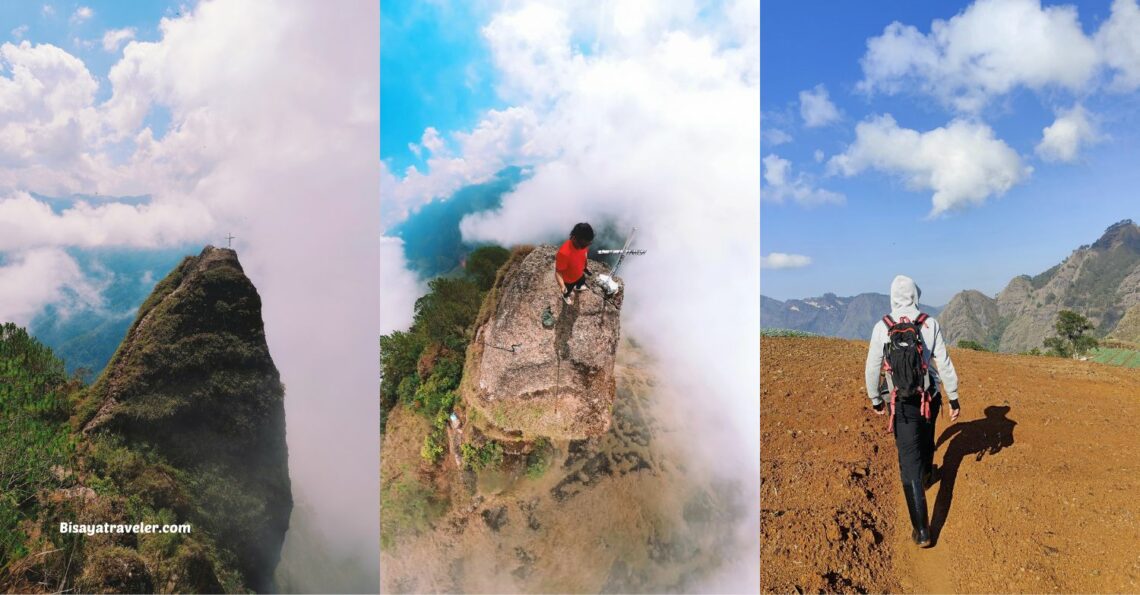
Mt Tenglawan And The People Who Have To Die On The Climb
Someone dies every time I climb a mountain. I’m responsible for every one of them. And I’m also one of them. I have climbed so many mountains across the Philippines, and I have never come down as the same person who went up. On my climb to Mt Tenglawan, I saw all those ghosts. They were the versions of me who no longer exist.
And here’s what nobody tells you about hiking.
You don’t just climb a mountain. You also leave someone at the bottom, or somewhere along the trail, or at the summit, staring at a view he thought would fix something.
Have you ever come back from a place and realized the person who left never actually returned?
I have. Many times. And I stopped being surprised by it somewhere around my second major climb.
So, who were those people I left on the trail?
And what did Mt Tenglawan, home of Insaking, teach me that day?
My Mt Tenglawan dayhike
If there’s one lesson everyone should learn from traveling, it’s to roll with the punches.
I traveled from Cebu to Luzon on a sunny weekend in May, expecting to see the emerald rice terraces of Batad.
Unfortunately, things change, and sometimes plans get cancelled.
Just before I left Cebu, I found out that my weekend trip to Batad was cancelled.
So, I went to Facebook to look for alternatives because, as we know, flights are non-refundable.
I considered going back to Buscalan, Mt Kupapey and even Mt Purgatory.
In the end, I decided to go somewhere I’ve never been to and somewhere I’ve dreamed of hiking one day: Mt Tenglawan.
The ride to the jump-off of Mt Tenglawan
I woke up on a cold Saturday morning somewhere in Benguet.
The van was shaking and my head kept bumping against the walls.
It took me a second to realize where I was.
I thought I was still in my room in Cebu, ready to jump off the bed for a busy day at work.
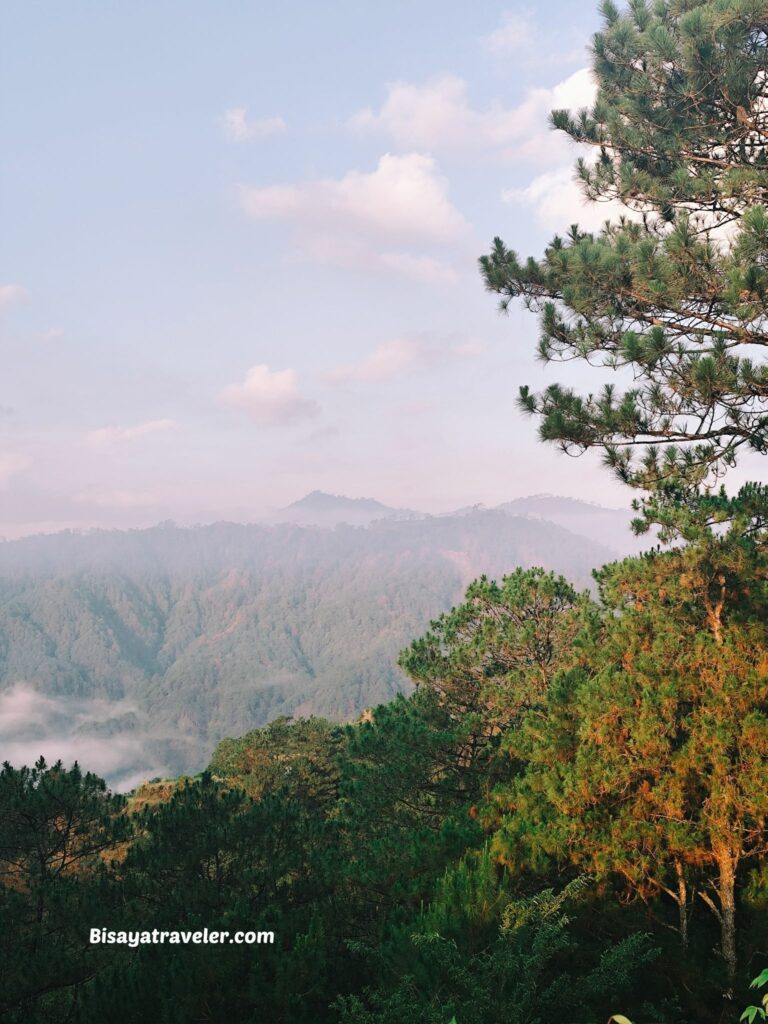
When I looked outside, I saw pine trees, towering mountains, and a dreamy sunrise.
That was the moment it hit me. I was actually doing this. I had put Mt Tenglawan on my radar ever since I climbed Mount Kabunian.
Something about its jagged peak and the way it sits inside the Cordillera landscape stayed with me. I needed to see it for myself.
Moments later our van stopped.
The road ahead was narrow, and it wasn’t for the faint of heart. It’s the kind of road that makes you grip whatever is closest and stop talking mid-sentence.
Our driver needed a moment before taking it.
We were supposed to ride a monster jeep from Bakun to the base but we were running late, so the van it was.
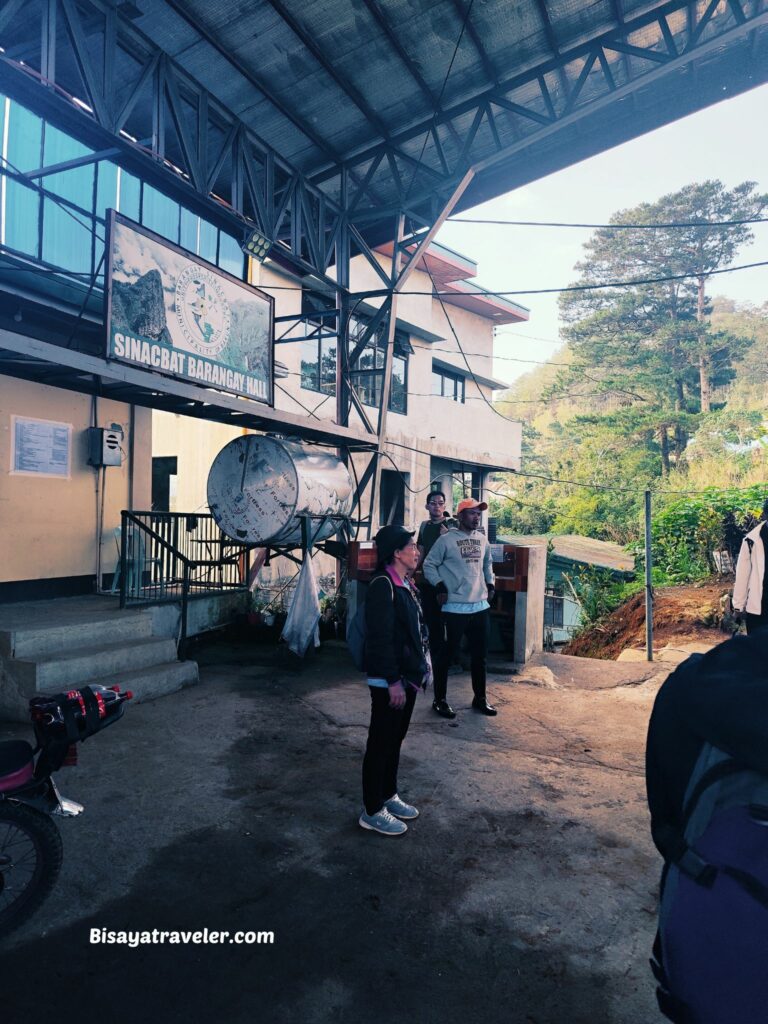
We arrived at the barangay hall for a short orientation and final preparations. Soon after, we took a short drive to the base of our Mt Tenglawan dayhike.
By the time we arrived at the base, it was already eight in the morning
Our guides said we had to be a little quick because our chances of getting a clear view would go down past ten in the morning.
And they were right.
The start of the hike
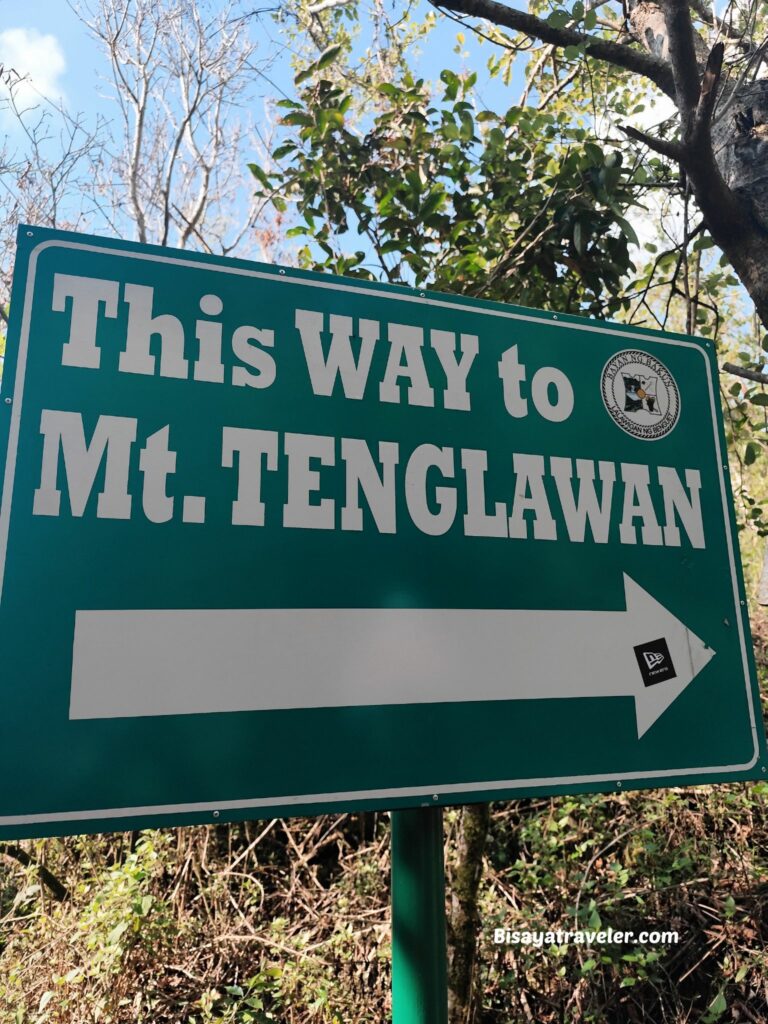
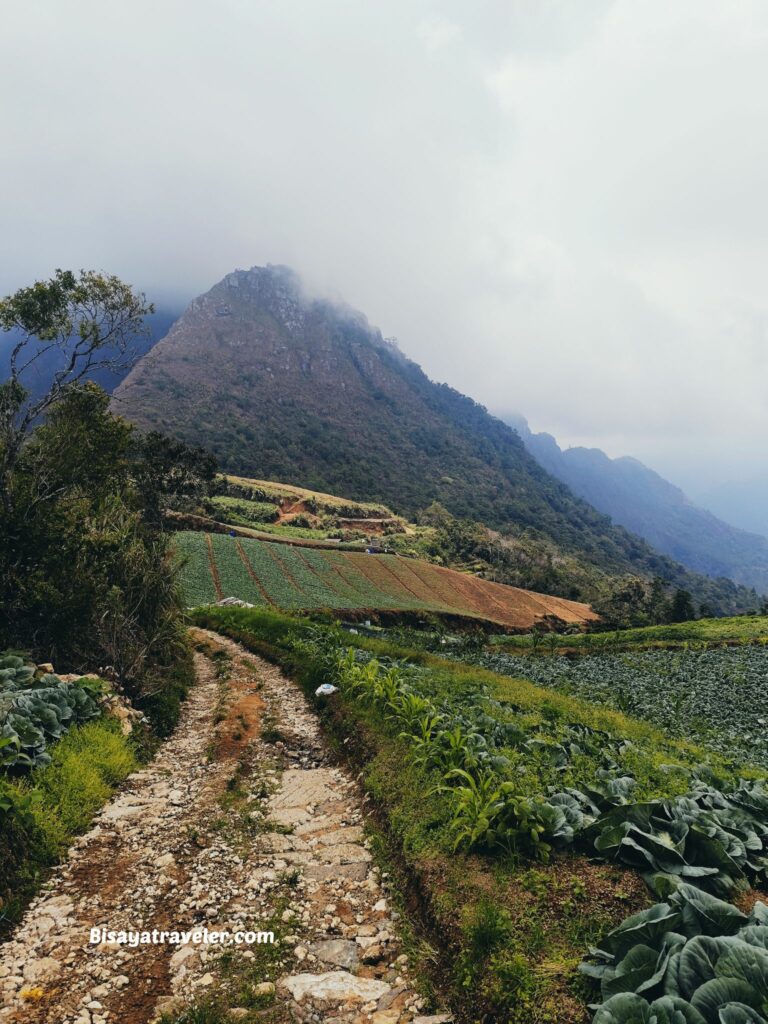
As we hit the trail, I was captivated by the view of Mt Tenglawan and Carrot Peak.
I’ve seen many Mt Tenglawan photos online, but not from this perspective.
Most were taken at the summit, where hikers lip-synced to “Rocketeer” by the Far East Movement against that jagged skyline.
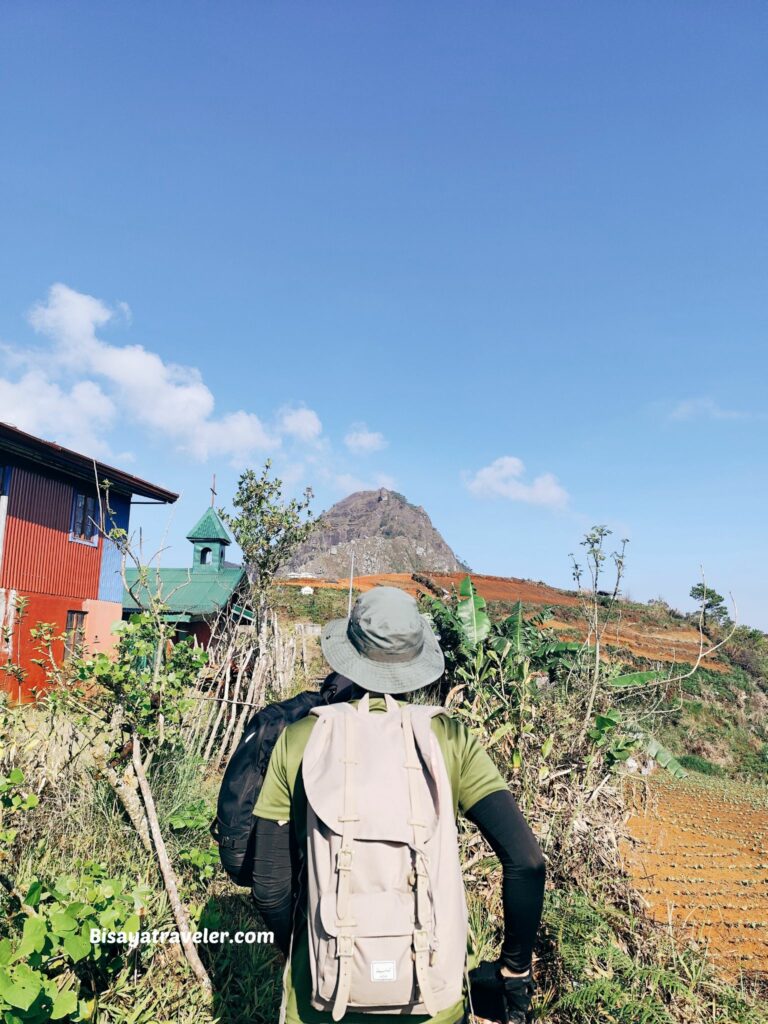
Down here it was different.
The view reminded me of Mount Apo. Same scale. Same feeling of being small in exactly the right way.
On this hike I started slowly and listened to my body. The first section was mostly downhill. I let it be easy. I waited for my legs to remember what they were doing.
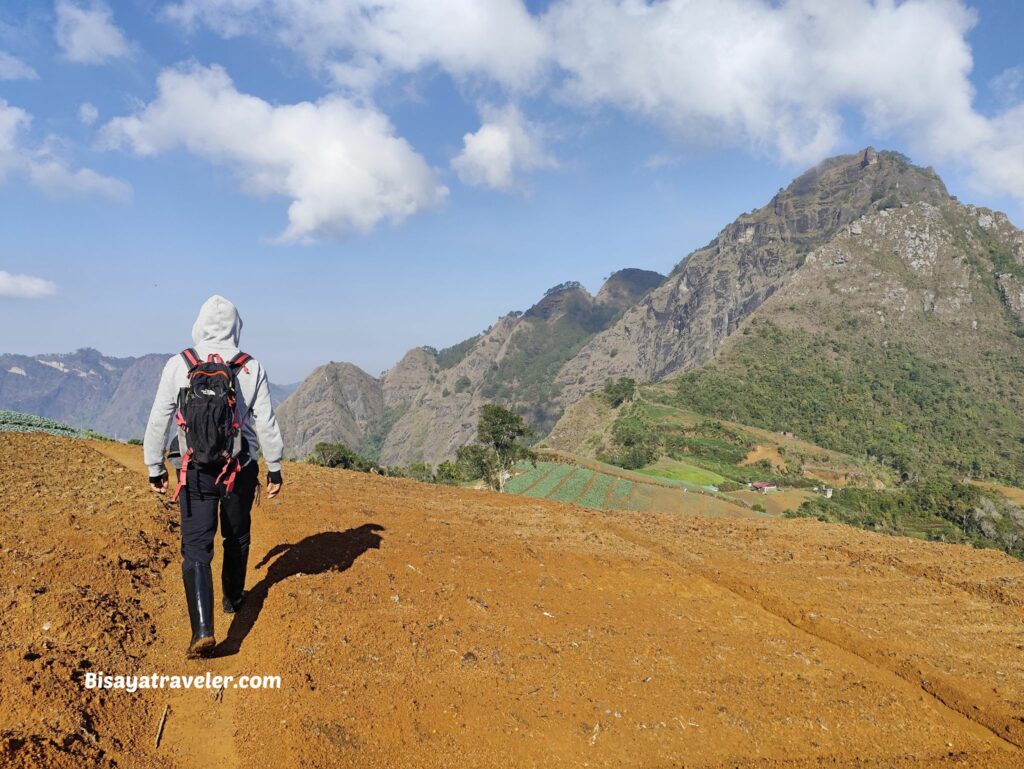
Somewhere along the way, I remembered the past version of me who died recently: the egoistic young speedster.
I was once a fast hiker.
With youth on my side, I finished towering mountains in short spans of time.
I used my athleticism, strength and endurance to conquer Mount Talinis and Alto Peak.
I took pride in finishing quickly. I counted the people I passed on the trail like points on a scoreboard.
But that hiker isn’t around anymore.
The speedster, full of youth, energy, and machismo, was left at the summit of Mount Kalatungan.
I got a severe ankle injury on that three-day climb, and it took me almost a year to recover from it.
No mountain had humbled me like Kalatungan did. It taught me that strength is not the same as mental toughness.
It taught me that the mountain doesn’t reward the fastest. It rewards people who respect them.
And it taught me that ego is the heaviest thing you carry on a trail and that slowing down is not losing.
I have been climbing slowly ever since.
I didn’t pressure myself to climb fast and reach the summit. And the reality is, there’s no point in going fast in the mountains.
At the end of the day, you’ll go home together in one van, with the same bunch of people on the trail.
The start of the ascent
It was all downhill, until I saw a paved, crooked stairway.
On the surface, it seemed like a relief after kilometers of hiking on a rocky, rugged, and mildly muddy pathway.
But stairways are, in truth, a hiker’s nightmare.
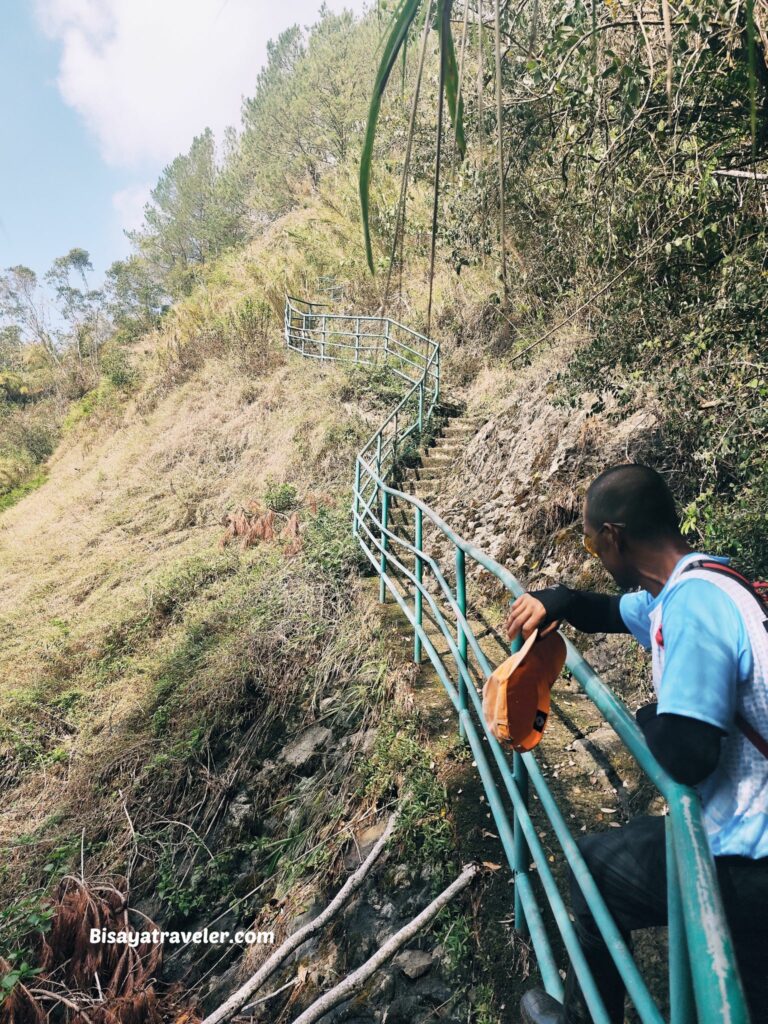
They force your body into a repetitive, unnatural motion that overworks your leg muscles and joints.
Unlike a winding incline, stairs eliminate the micro-adjustments that keep your legs fresh and stable.
On top of that, it was getting warmer by the second on the trail.
Huffing and puffing, I was reminded of another person I left on the trail: the dumb hiker.
I was once a reckless hiker with no strategy.
I relied on sheer force to overcome whatever the mountain threw at me. I didn’t drink enough water on the trail because I didn’t think I needed to.
I had gear but not enough of it. Strength, I figured, would cover the gaps.
I never checked the weather before a climb. I was fearless in the way that only someone who hasn’t paid for it yet can be fearless.
The mountains eventually presented the bill.
I don’t know the exact trail where I left that hiker. But I know he’s gone. Somewhere between my early climbs and now, he stopped showing up.
And honestly, good riddance. He was going to get someone hurt.
As I looked up, I knew I had to keep moving, slowly and deliberately.
Stopping in that heat would only drain me faster. That was something the dumb hiker would never have understood.
So, I kept on moving, taking slow steps.
I left the rest of the group, but I had to because the heat was my kryptonite.
I kept moving, taking slow and deliberate steps.
I left the rest of the group. I was ahead.
They were younger and had more energy, but heat was my kryptonite. I had to be smart and strategic to finish this climb.
Soon, I arrived at the mossy forest section of the trail. While not as stunning as the mossy forests of Mt Makiling and Mt Dulang-Dulang, it was refreshing and dreamy.
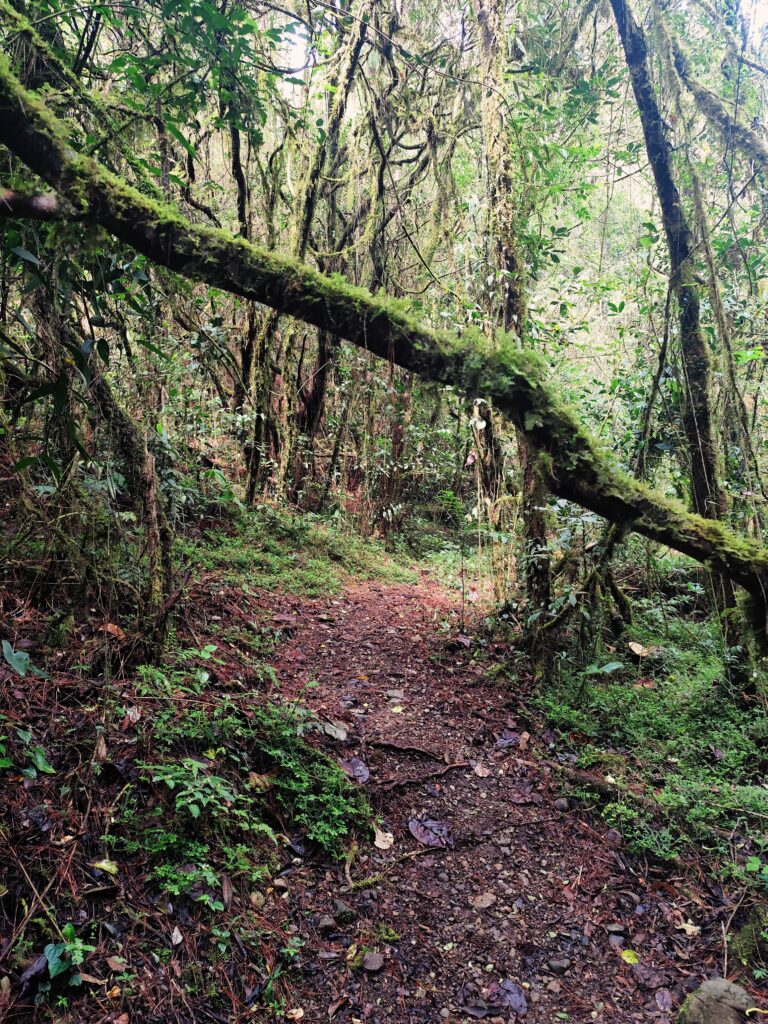
I kept on walking, without taking long pauses.
I passed by a creek, and saw the uphill pathway.
Earlier, the guide told me it would be a non-stop uphill climb to the summit from the mossy forest.
I was ready. The dumb hiker and the speedster had taught me that much, at least.
Take baby steps
When I was younger, I took long strides on steep trails and inclines.
I thought it made me faster and got me through the steeper sections quickly.
It did. But it was also burning more energy and working more muscle groups than necessary.
The result was the same every time: I arrived exhausted.
It took me several mountains to figure out what I was doing wrong. The answer was embarrassingly simple.
Take baby steps.
On a steep incline, short and deliberate steps reduce the strain on your knees and hips.
They keep your breathing steady.
They conserve the energy you will need later, when the trail gets harder and the summit feels farther than it should.
Best of all, you don’t arrive exhausted.
And here’s the thing about baby steps.
They are slow, but they limit the number of breaks you need.
People on the trail would see me moving ahead and assume I was fast.
I wasn’t.
I was just not stopping. The people who usually were overtaking me early were the ones I’d find resting on a rock twenty minutes later.
Breathing helped too. I learned to control my breath on the ascent, exhaling on the hardest steps, keeping a rhythm instead of gasping.
It sounds simple. It changed everything. Your legs and your lungs are in conversation on a steep trail. Once you figure that out, the mountain becomes a different place.
But baby steps are not just a hiking technique. They are a way of moving through anything difficult. Grief. Recovery. Starting over.
The instinct when life gets steep is to power through. That instinct will exhaust you every time.
The versions of me who never learned this are still out there somewhere, collapsed on a trail, wondering why their legs gave out.
Alone on the trail in Mt Tenglawan in Bakun, Benguet
I reached a ridge somewhere on the way up to Mt Tenglawan.
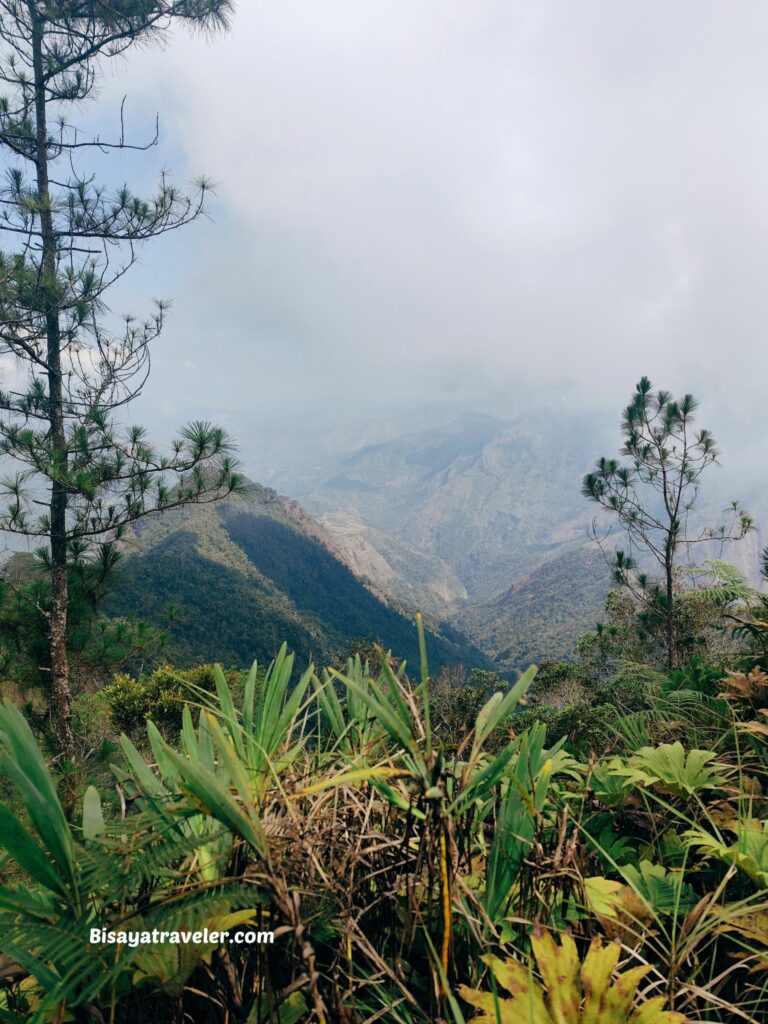
I could feel the summit just a few meters away. It looked close but wasn’t.
I paused for a few seconds, listening to the sounds of nature, trying to locate the other hikers.
I couldn’t hear them. They were still far behind.
And then I felt it. Relief.
Plain, uncomplicated relief.
I had been using mountains for years as an exit. Book a trip. Lace up. Move.
As long as the trail kept demanding something from my body, my mind had an excuse to be somewhere else. It worked, for a while. Mountains are loud enough that way.
It was just me, the ridge, and the silence.
That was the moment I remembered another person who died in the mountains: the one who climbed to escape.
I had been climbing mountains during one of the harder seasons of my life.
Marriage. Family. Work. Stress.
The mountains were my answer to all of it. A place where I could outrun everything waiting for me at the bottom.
But the problems were always there when I got back.
The mountains were like alcohol that way. They made you feel good for a while, but the morning still came.
Unlike alcohol, though, the mountains gave me space to think clearly.
In my solitary moments on the trail, I found solutions to some of my problems. Not always, but sometimes, and sometimes was enough.
The thing is, you don’t find answers at the top. You find them somewhere on the way up, when it’s just you and the trail and no excuse not to think.
Alone in the wilderness, I had plenty of space to think about my life.
I used all of it and absorbed the calming sounds of nature.
I kept climbing. Alone with my thoughts, no noise except the sounds of nature.
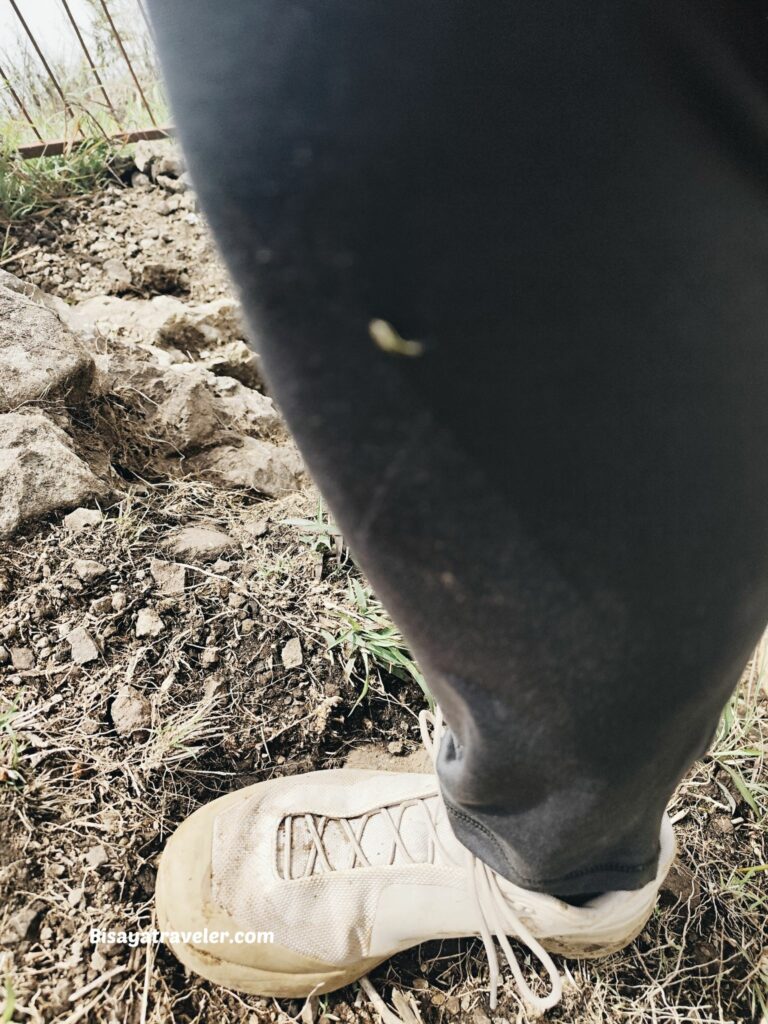
I was so deep in my head that I barely noticed the leech on my hand and leg.
The top of Mt Tenglawan
I reached the top of Mt Tenglawan in one hour and thirty minutes.
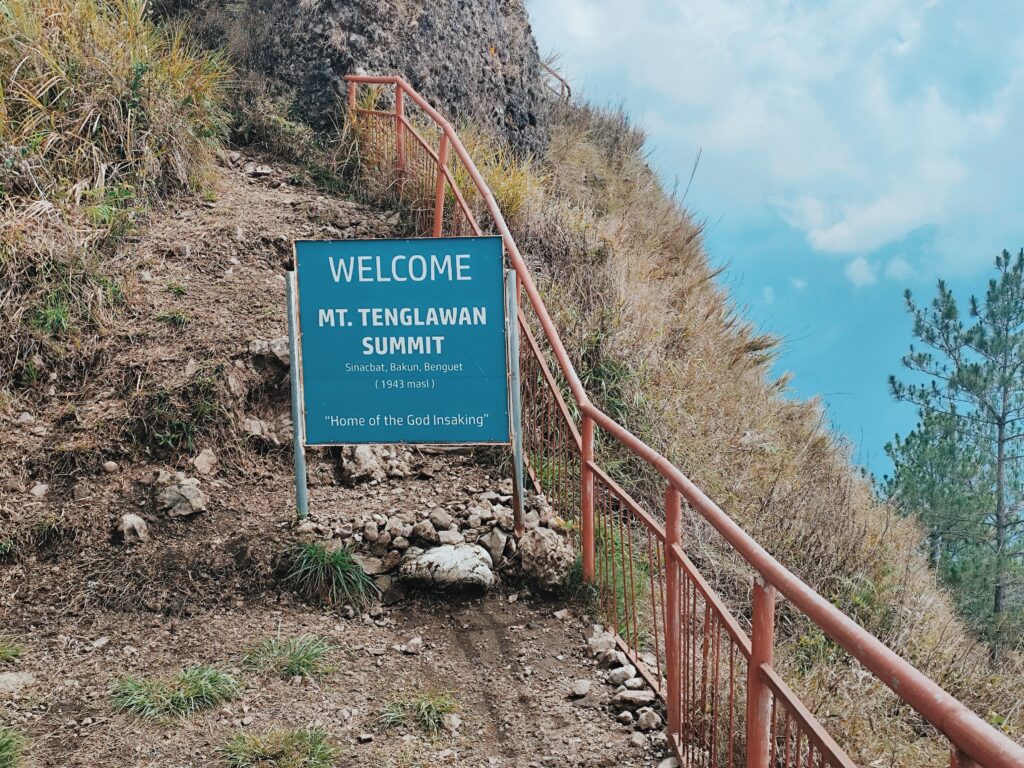
I didn’t do it to prove I was strong or impress anyone.
I did it because the guides told me the peak would be surrounded by clouds past ten in the morning.
Thankfully, I still got a clear view of Carrot Peak and the surrounding landscapes from Mt Tenglawan.
I was so amazed by the view, I forgot to take a picture of the view without the fog.
Soon, the whole summit was covered in a white blanket.
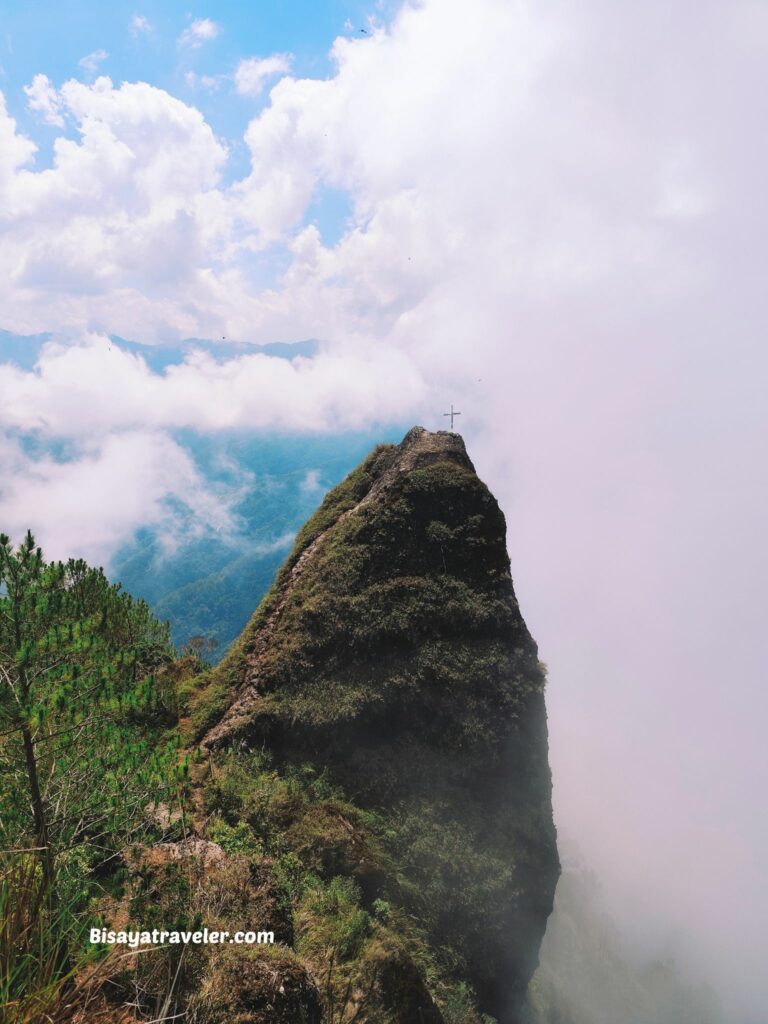
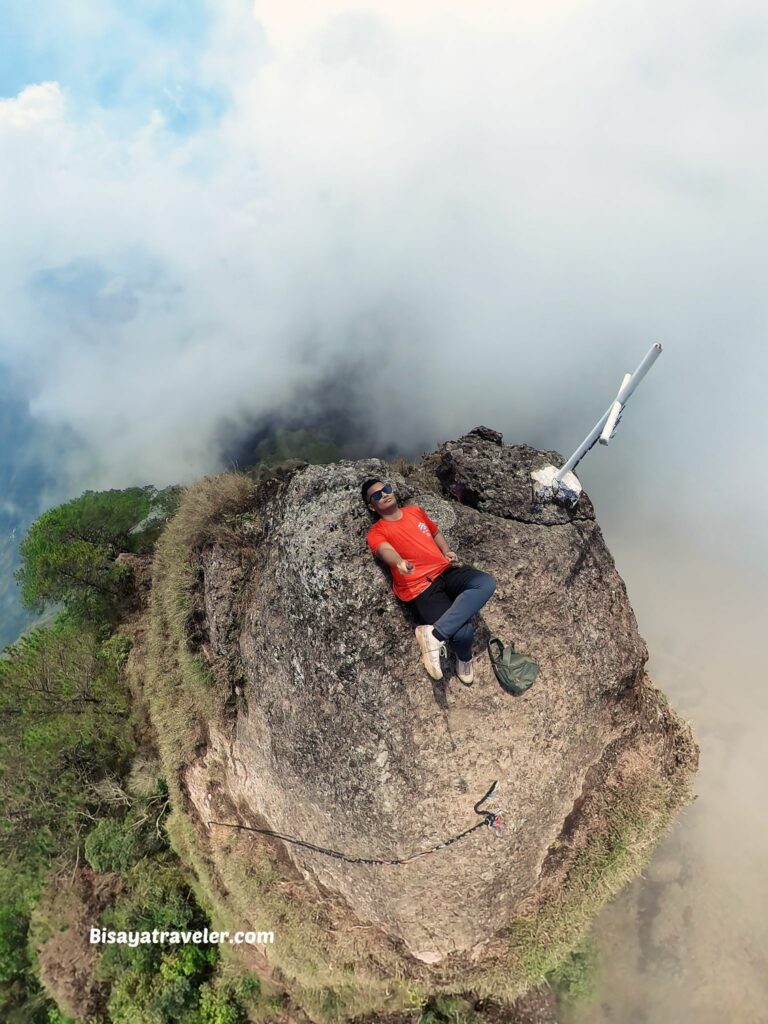
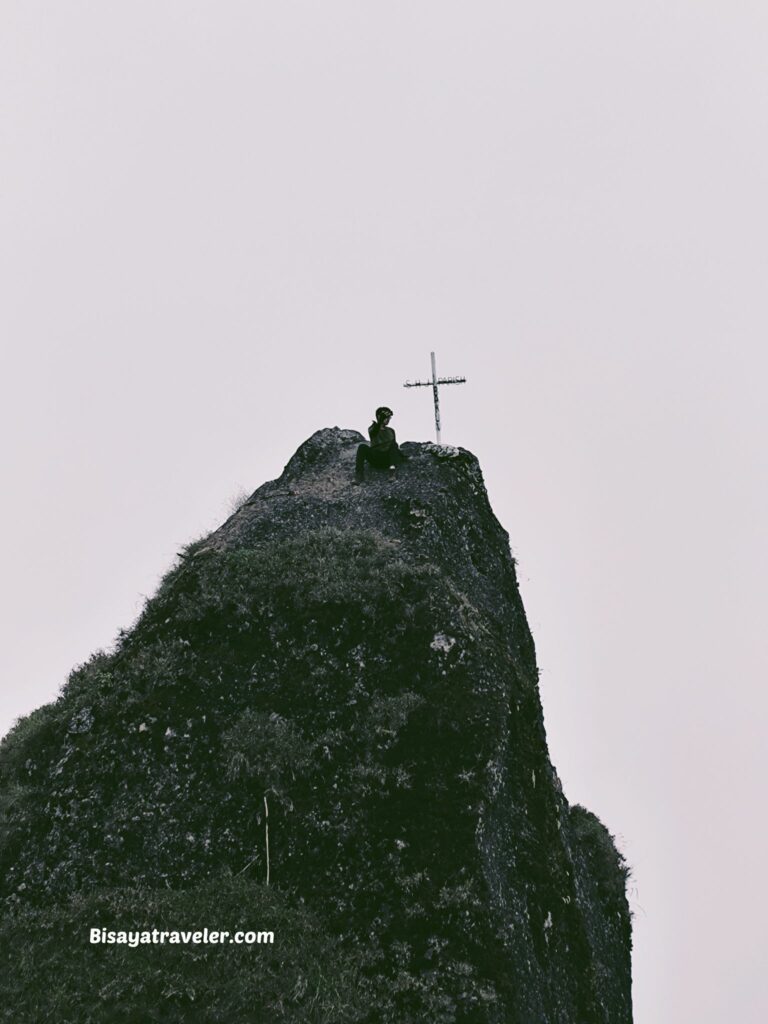
Alone and curious, I went to Carrot Peak, and attempted to climb it.
I was just inches away when I realized it wasn’t safe.
There were no ropes when I arrived at the peak because the guides were the one who installed them.
I arrived there while the guides were still far away.
So, I went back down.
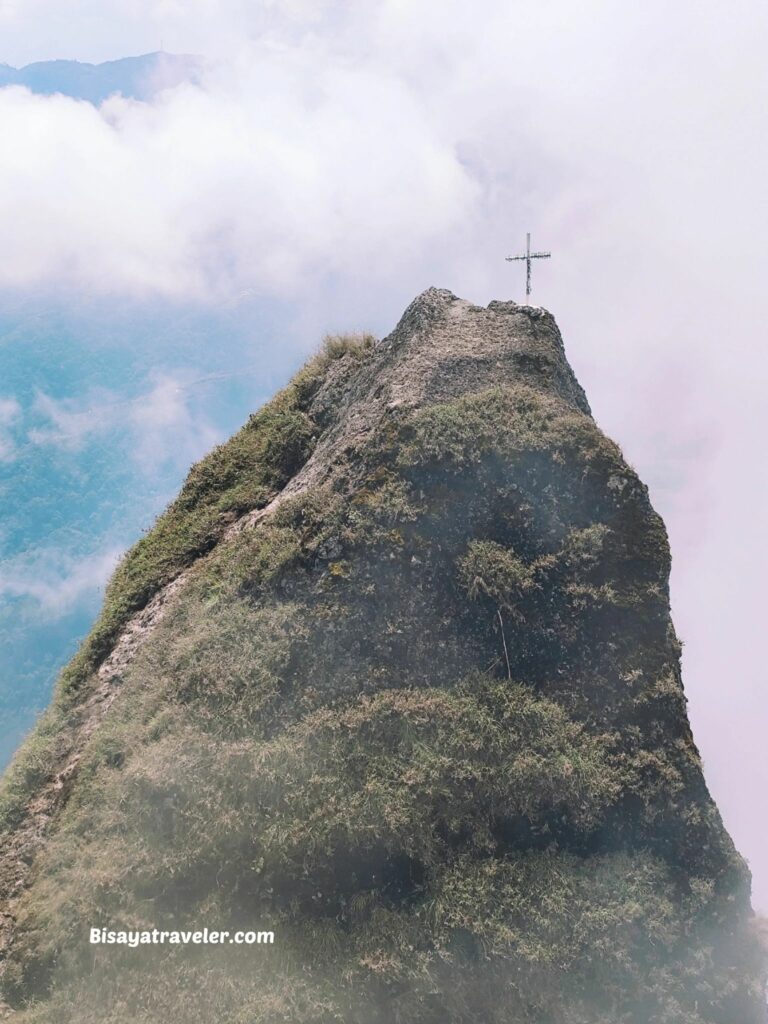
On my way back, a past version of me resurfaced: the devil-may-care risk taker.
There were times in my life when I did crazy things for adventure.
I climbed 90-degree cliffs with no ropes, explored active mining sites, and got lost in areas with marijuana plantations.
One false move and I would have been personally introduced to Saint Peter and his pearly gates.
I was reckless because I genuinely believed life was short. I still do. But the mountains added a caveat to that belief: life is short, so don’t cut it shorter.
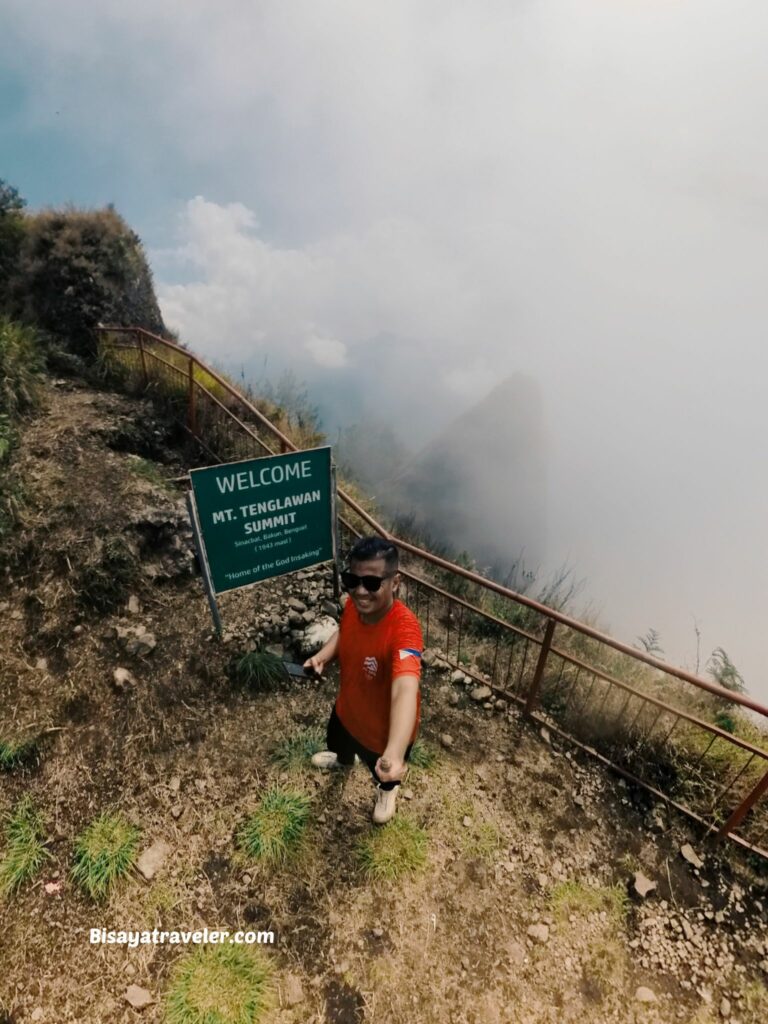
There are too many trails I haven’t walked. Too many summits I haven’t seen. I wouldn’t get to any of them dead.
I still want to learn more. I want to expand my knowledge and wisdom that I hope one day I could pass down to my unica hija: Adrielle.
Mt Tenglawan photos and videos
Minutes later, the guide and a few hikers arrived at the summit.
We had a drone operator, so I took the opportunity to pose at the top of Carrot Peak.
It looked terrible.
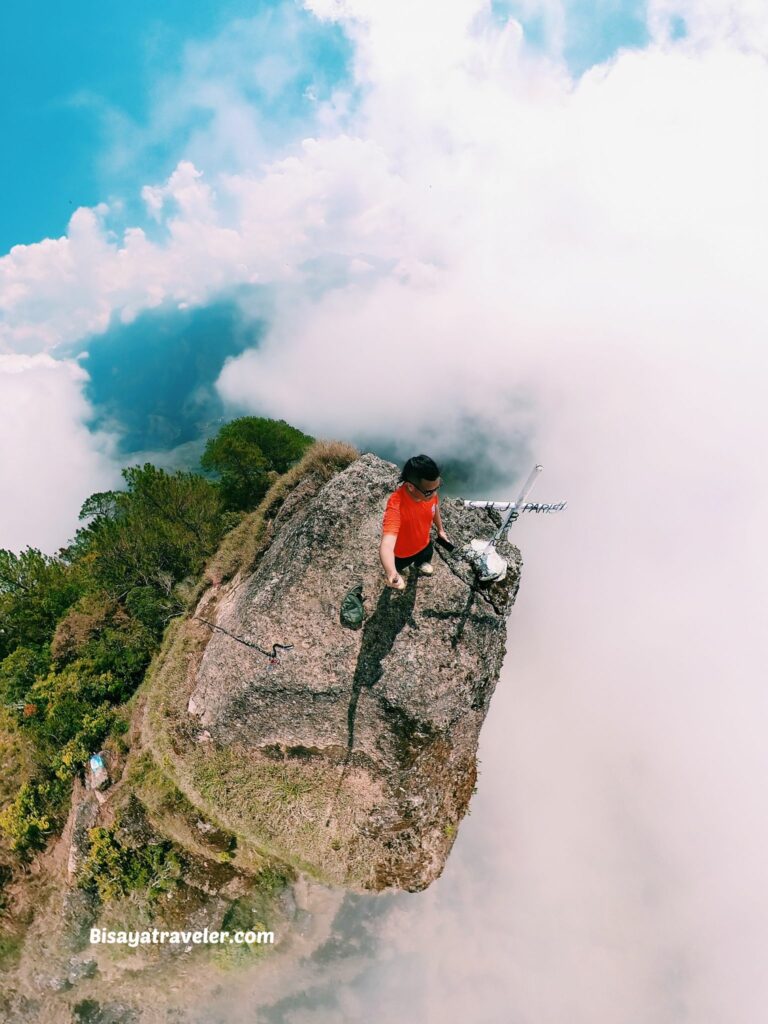
Unlike the younger version of me, I’m not great in front of a camera.
I don’t have a cool signature move that gets likes on Instagram.
I don’t even have a TikTok account.
And I definitely can’t do that “take my hand, close your eyes, with you right here, I’m a rocketeer” lip-sync on the summit.
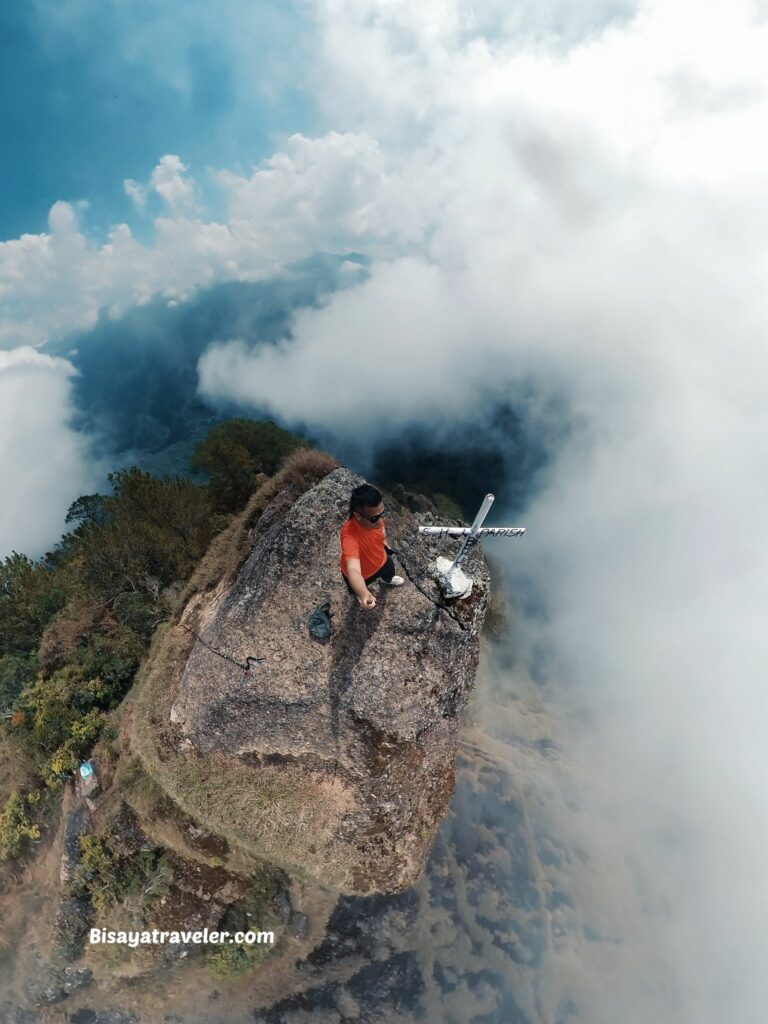
That’s not me anymore.
This experience in Carrot Peak reminded me of a version I left on a summit: the influencer who chased validation.
There was a time when I wanted the world to see me and what I had done.
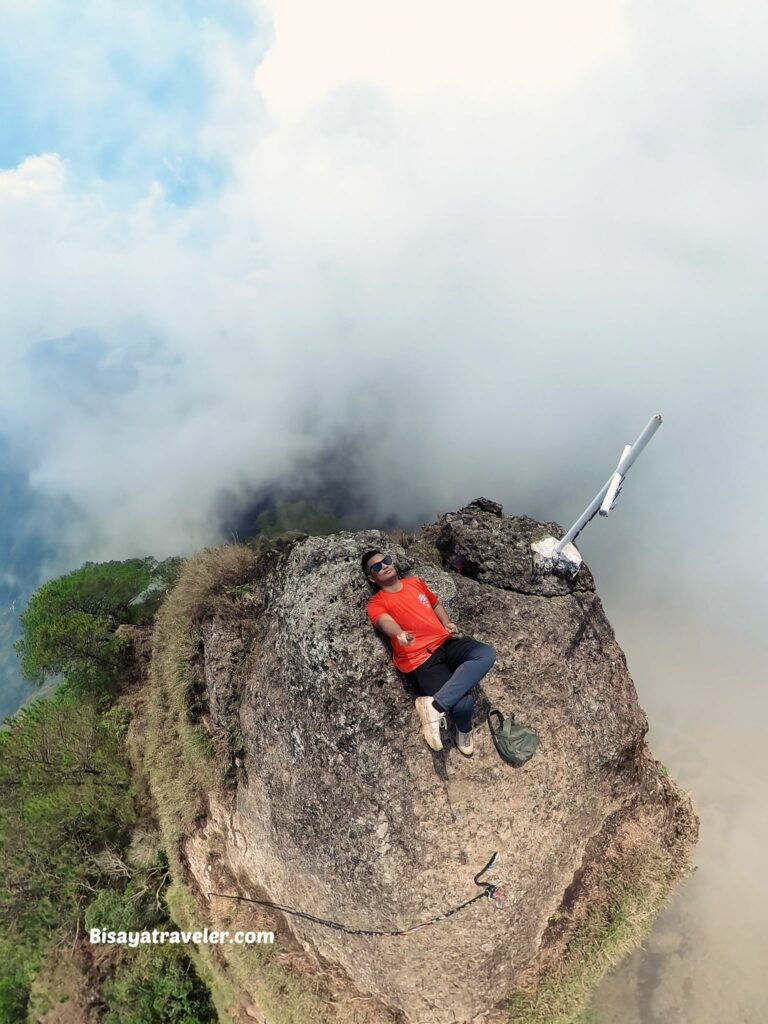
I wanted cool photos, recognition, and awards. I eventually got them.
But one day, while I admired the absurd beauty of Mount Pulag, I realized none of it mattered.
The likes, the awards, the praise, they won’t mean anything on your deathbed.
I stopped chasing them after that. I still get recognition sometimes. I just don’t need it anymore. I prefer to see the view with my own eyes instead of through the lens of a camera.
Honestly, I don’t have a lot of pictures of Mount Tenglawan. But it doesn’t matter. I don’t give a fuck.
What matters is the experience and the people I met on the trail.
Going down from Carrot Peak
Getting down from Carrot Peak was a little scary.
Actually it was easier getting up to the top than going down.
looked awkward on the descent, and on the last section I had to use my big butt for safety purposes.
Then a hiker asked me for a tip on how to get down.
I told him it’s better to look stupid while safe than look cool and die on the mountain.
That’s when another ghost resurfaced: the conscious hiker.
I always say hiking isn’t ballet.
I’m not saying ballet isn’t hard because it’s tough and you need a lot of discipline.
But unlike ballet, hiking isn’t pretty.
It’s gritty, messy, and sometimes you’ll look stupid.
When I was younger, looks mattered to me.
I worked out every day, counted my calories, drank whey protein and supplements. I wanted to look the part.
But hiking doesn’t care how you look. You’ll crawl, grab branches, wade through mud, and go over boulders.
You’ll arrive at every summit sweaty, haggard, and slightly destroyed. And it will always be worth it.
Life is the same way. We all want to look good. But to get out of the mud, sometimes you have to get into it first.
Nobody looks graceful when they’re growing. They just look like someone who refused to stop.
The most important moments in your life will not be pretty. But they will be worth it.
The Descent
The sky was covered in white. The view was gone.
I asked the guide if I could go ahead while the others were still taking pictures. He sensed I had years of experience and let me go with a few other hikers.
I went down at my own pace, using the side-step technique veterans use to protect their knees. I kept walking until I noticed there was no one around me.
Another ghost resurfaced: the people-pleaser.
Years ago I would have waited for the group. Said something encouraging. Made sure everyone was okay before I moved.
But I didn’t fly from Cebu and travel thirteen hours to Benguet to please people. I came here to push myself and be alone with my thoughts.
In the Philippines, we are trained to be selfless. Pakikisama. Bayanihan. These are beautiful values.
But somewhere inside them, self-love got lost. Traveling alone taught me it was okay to find it again.
I know self-love is still taboo in the Philippines, but as they always say, you can’t pour from an empty cup.
Mt Kabunian vs Mt Tenglawan
When I was close to the base, I looked back and admired the towering silhouette of Mt Tenglawan. It was beautiful. Not perfect, but memorable.
At the summit, hikers were comparing Mt Tenglawan to Mt Kabunian. They thought Kabunian was better because it was tougher and more scenic.
I agreed with them.
But looking back at it alone, I realized we shouldn’t be comparing them. They are two different mountains with different myths, lore, and history. Both beautiful. Both worth the climb.
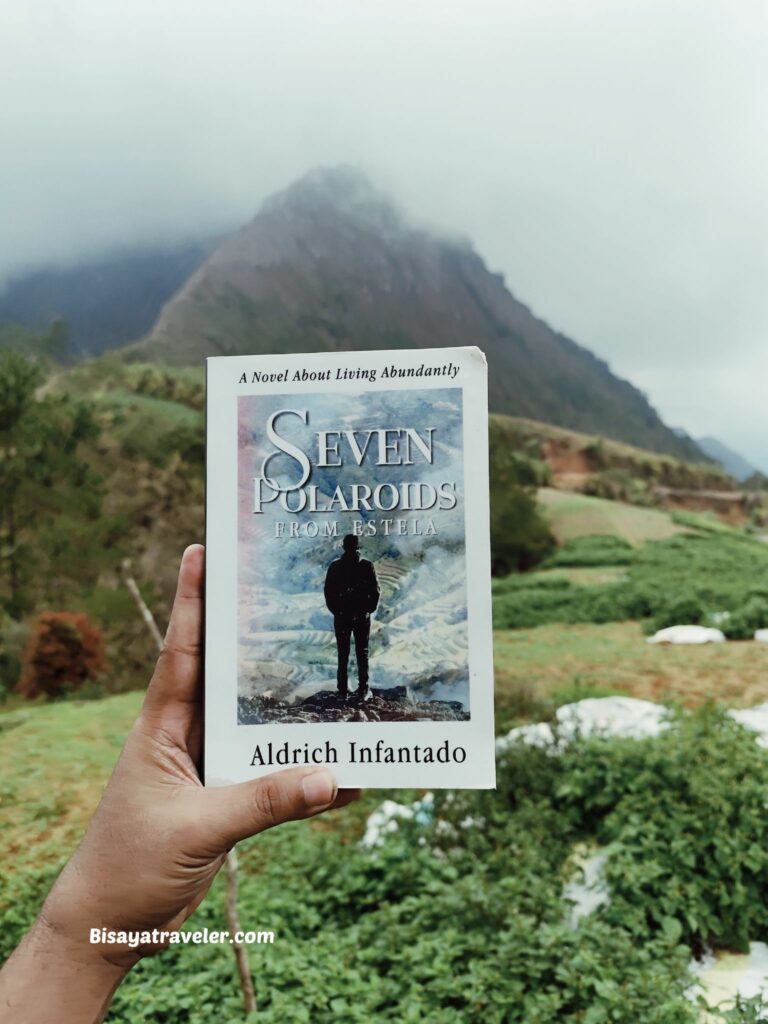
Comparison is the thief of joy. I shouldn’t let my experience on Mt Kabunian rob me of the joy of completing Mt Tenglawan.
You can’t fully enjoy where you are if you’re constantly measuring it against where you’ve been.
Is Mt Tenglawan a major hike?
It’s subjective, but for the most part, it’s not considered a major hike. Most people rate it 5/9 in difficulty. I would rate it 4/9 in difficulty.
Is Mt Tenglawan good for beginners?
Mt Tenglawan is good for beginners who are moderately fit. It doesn’t have technical sections, and the trail is well paved.
How to get to Mt Tenglawan?
The best way to get to Mt Tenglawan is to join an organized hike. It’s convenient, affordable, and lets you meet new people. If you prefer to take this route, I recommend Melou’s Travel and Tour.

Aldrich Infantado
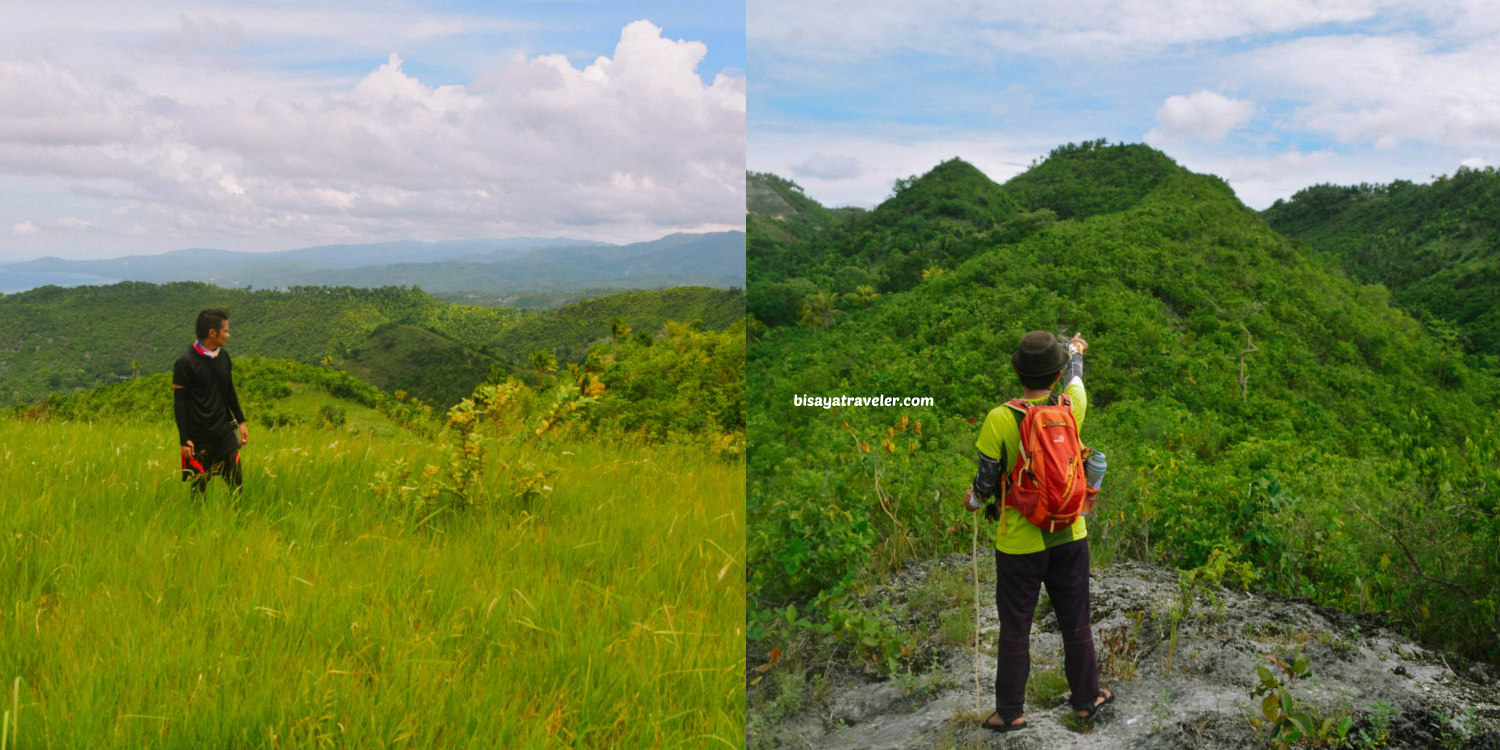
Aldrich Infantado is a travel junkie and a writing aficionado who loves to share amazing travel tips to his fellow travelers.



5 Comments
Jessy
This is such a good read! I’m from Cebu as well and just started doing trails/hiking for less than two years. You inspire me to climb more and chase new heights! Keep documenting your climbs po! Amping sa pag saka, co-cebuano 🙂
Aldrich Infantado
Thank you, my fellow Cebuano. I hope to see you on the trails one of these days. Keep climbing! 😉
Pingback:
Aye
This is so well-written! Sobrang na open ang eyes ko and ang dami ko rin realizations while reading this piece. This is so good
Aldrich Infantado
Thank you, po! 🙂