Mt Tuwato: Deadly Ridges, Raging Rivers, And Remarkable Life Lessons
Life, as we know it, is hard. It’s a never-ending teleserye of setbacks, problems, and headaches. And sometimes, we take on even more challenges that make us question our life choices. Want a perfect example? Me, hiking Mt Tuwato, a mountain rated 9/9 in difficulty, on a rainy Saturday after barely getting any sleep in the past couple of days.
I know. It had disaster written all over it. Even so, I wasn’t about to cancel this hike in Cervantes, Ilocos Sur. While the odds were against me, I knew I could survive whatever Mt Tuwato threw at me with grit, focus, and a veteran hiker’s instincts.
So, what did this hike in Ilocos Sur teach me?
And is Mt. Tuwato really worthy of its intimidating 9/9 difficulty rating?
My Mt Tuwato adventure
I often make questionable decisions when I travel.
I don’t plan everything meticulously. Instead, I tend to rely on my instincts and signs from the Universe when making decisions.
But Mt. Tuwato was different.
A week before the hike, I made sure I stayed properly hydrated and got plenty of sleep.
I even took a short hike up San Carlos Heights in my hometown of Cebu City a few days before the trip.
But it seemed the Universe had other plans for me.
Just as I was about to leave for the airport, the airline notified me of a flight change. Our flight would be delayed by at least a couple of hours.
Shit!
That was one curveball I wasn’t prepared for.
I had booked a flight before midnight so I could get some sleep before starting work in Manila.
I took a deep breath and uttered my favorite words: “Que sera, sera.”
As I sat in the terminal waiting for my flight, another email from the airline landed in my inbox.
They had moved my flight again, bringing the total delay to three hours.
Oh, holy fuck!
I was screwed. With a difficulty rating of 9/9, I needed to be in top shape to finish Mt. Tuwato.
I had prepared both physically and mentally.
But now that I wouldn’t have enough time to sleep and recover, doubts started creeping into my mind.
The meetup at Greenfield
I wasn’t exactly at a hundred percent when we began our journey from Greenfield.
I had arrived in Manila at four that morning and started working at six.
Two hours might seem like enough time to squeeze in some sleep. But I couldn’t doze off, knowing my alarm would go off again soon.
On the bright side, I found out that a few of my fellow hikers were also Bisaya.
We talked as if we had known each other for years, swapping stories about our adventures on mountains across the Philippines.
We talked about Mount Apo, KXC, Mount Dulang-Dulang, and even Mount Amuyao.
Along the way, I tried to catch up on some much-needed sleep. It wasn’t exactly comfortable, but somehow, I managed to get a little rest.
Hopefully, it would be enough to get me through Mt. Tuwato.
The jump-off
When we arrived at the jump-off point, I felt surprisingly energized. Apparently, all I needed was a couple of hours of decent sleep to get my engine running.
I ate the Jollibee burger I had bought earlier and began preparing my gear for our Mt Tuwato day hike.
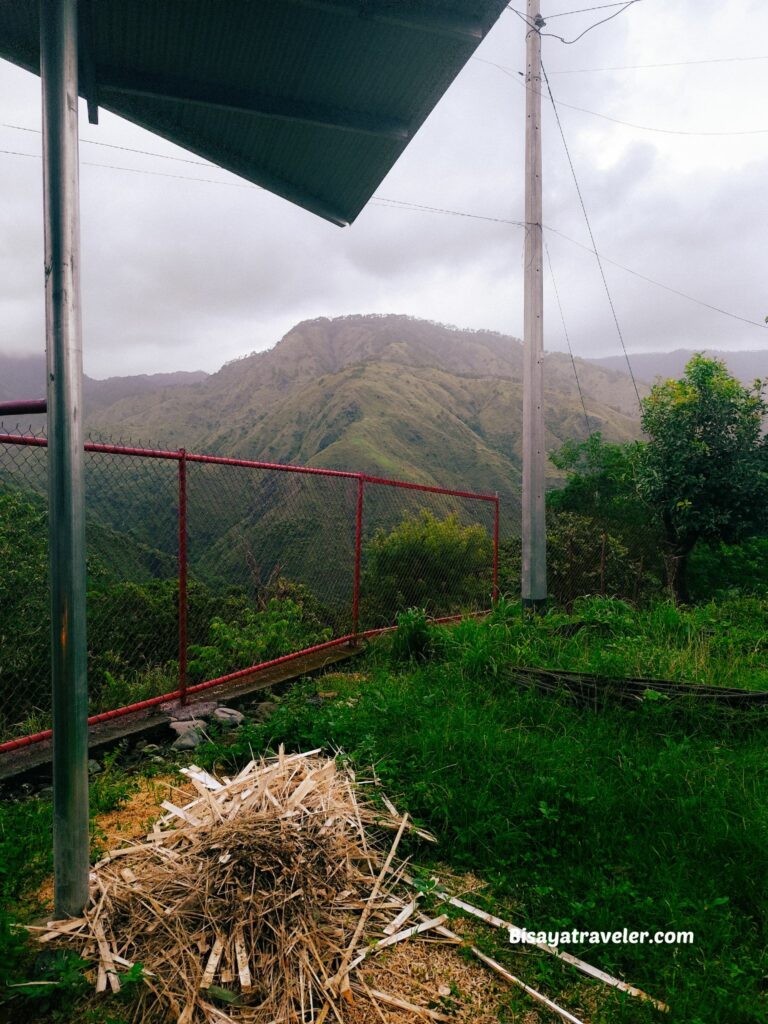
Then, I tried to assess what lay ahead by asking our guides about the trail and terrain.
They were blunt and honest.
They didn’t sugarcoat anything. The hike would be tough, and it could take us at least 12 hours to complete.
I checked my phone. It was already seven in the morning.
We were originally supposed to start hiking at 2:30 a.m. But because of the heavy Friday traffic, we arrived late at the jump-off point.
Despite all the unforeseen setbacks, I was still quietly confident that I could complete the hike.
I might not be as physically strong as I once was, but I had experience and knowledge on my side.
Besides, the mountains of the Visayas and Mindanao had toughened me up and trained me well.
The start of the hike
The first part of the hike seemed fairly normal and easygoing. There were mild ascents and a few slippery sections, but nothing difficult enough to slow us down.
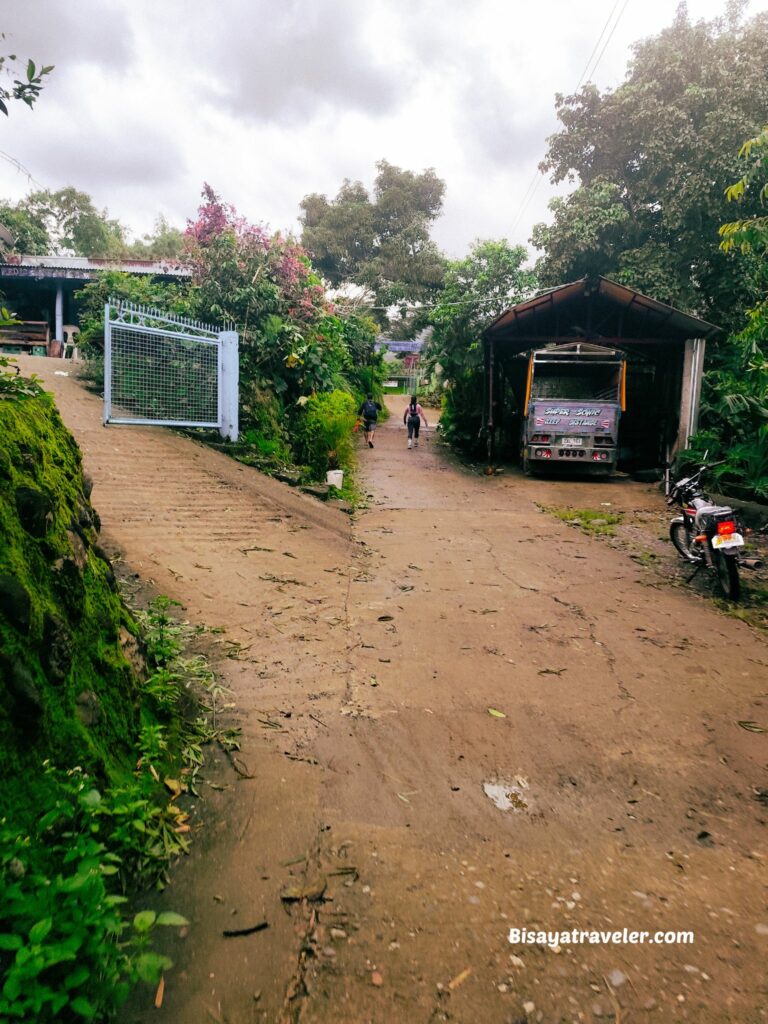
Our lead group consisted of four hikers, plus our guide. It was three Visayan women and me.
To my surprise, I was the only male hiker in the lead pack.
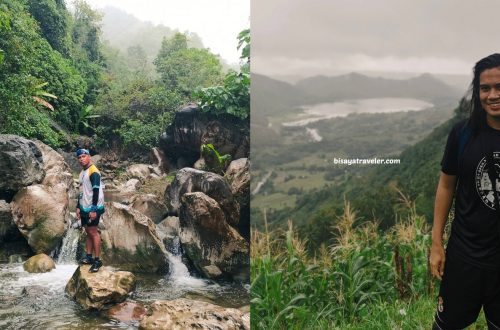
Eventually, we spotted a waterfall in the distance. It reminded me of Muleta Falls on Mount Kalatungan.
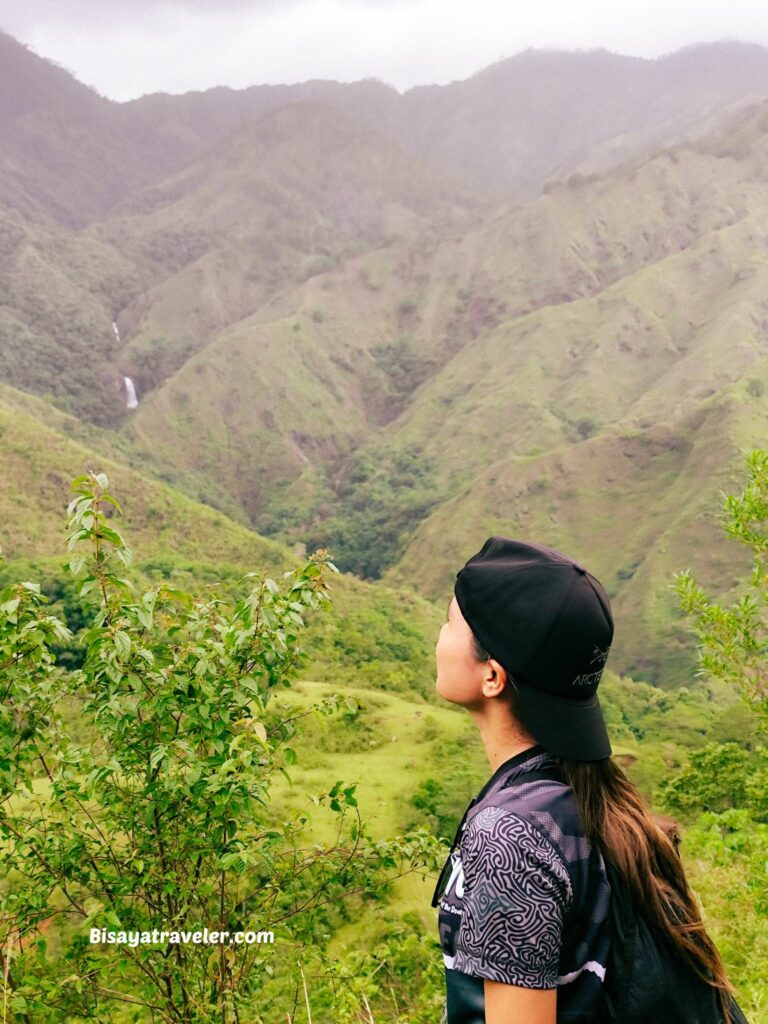
We then headed downhill, crossed several streams, and kept walking until we reached the banks of a raging river.
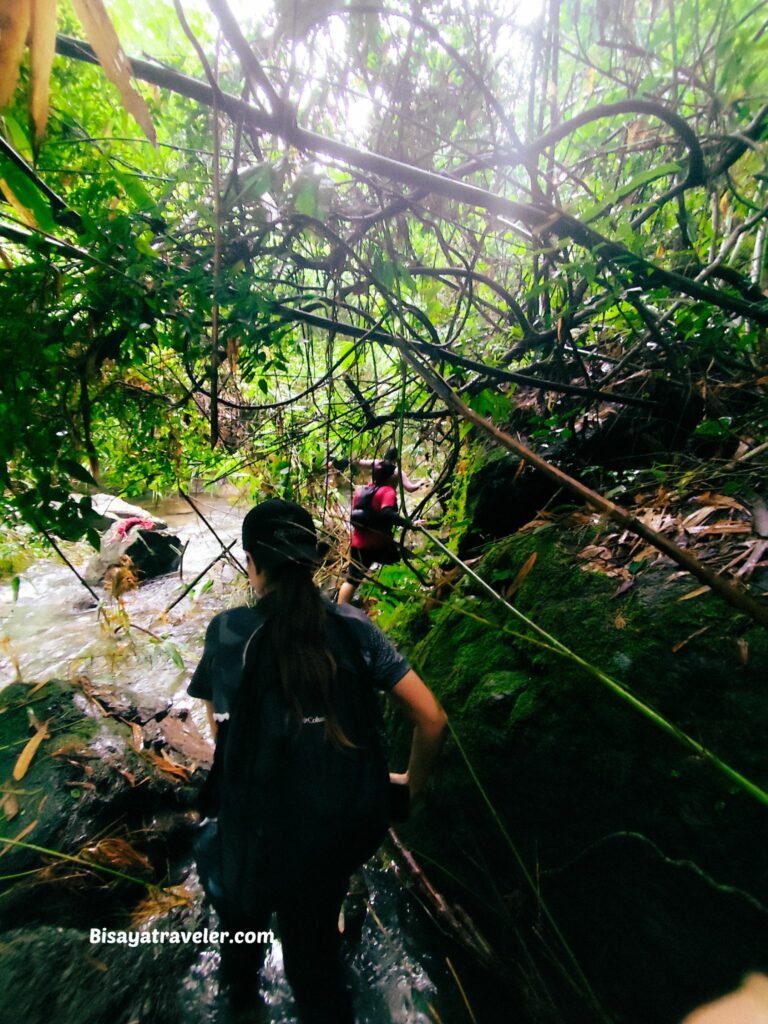
Since no one had hiked Mt Tuwato in quite some time, our guides had to clear obstacles along the trail. They also created a pathway so we could safely descend to the river.
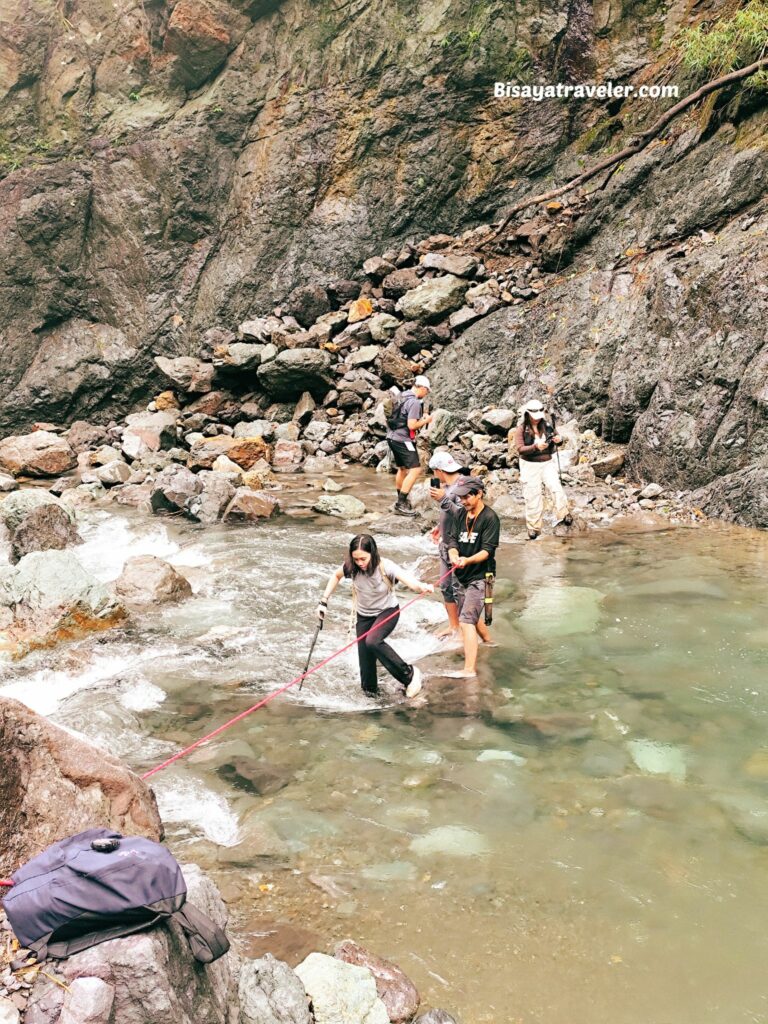
Crossing it wasn’t particularly difficult, but one slip or miscalculation could have been deadly.
Once we made it to the other side, we regrouped, refilled our water bottles, took a few pictures, and continued our hike.
So far, our Mt. Tuwato hike had been a breeze. Even with the slippery trails, obstacles, and river crossing, it hadn’t been physically demanding.
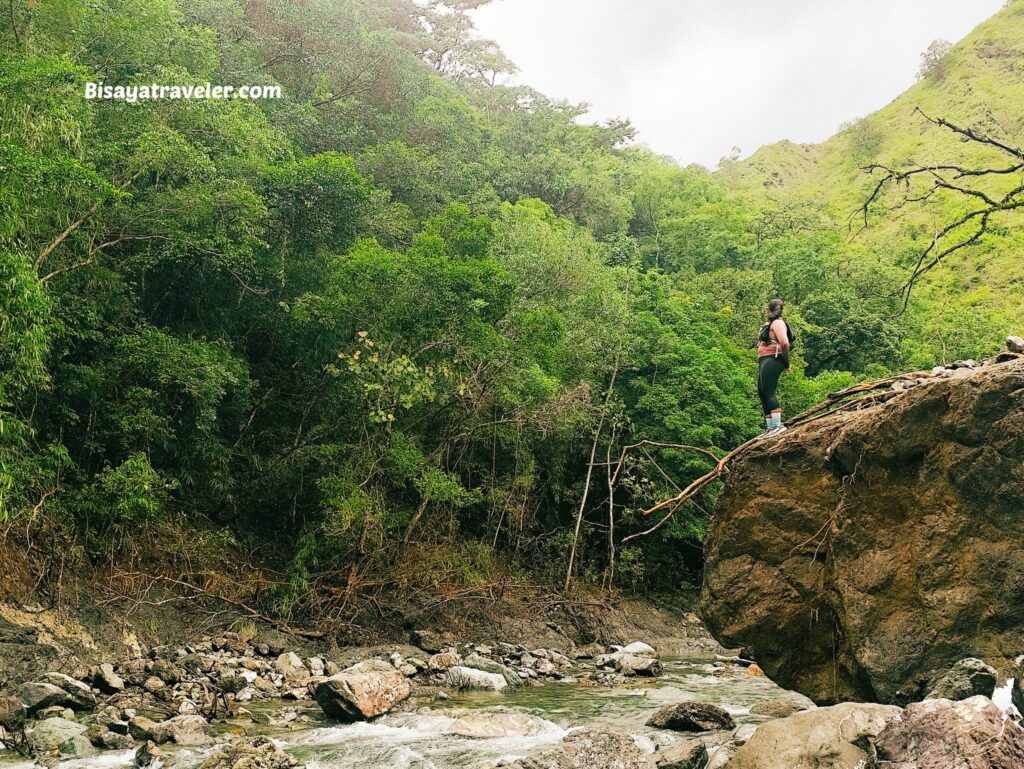
But I was about to find out why this mountain had earned its intimidating 9/9 difficulty rating.
When in doubt, just keep on walking
From the river, we followed a steep uphill trail that seemed to have no end.
I glanced behind me and saw that another woman had caught up with us. Our lead pack had grown from four hikers to five: four women and one old man.
The ascent tested my lungs, sent my heart rate soaring, and put more strain on my legs. It was getting warmer, too.
Soon, doubts began creeping into my mind.
The voices in my head were screaming, telling me I should have stayed home and watched Netflix or Vivamax instead.
They were loud and relentless.
They insisted that I had made a terrible decision and should have canceled my Mt Tuwato hike, especially since I was sleep-deprived.
But those voices knew I was one stubborn son of a bitch.
I refused to listen to those demons. Instead, I kept walking, one step at a time, until their voices began to fade.
This wasn’t my first time hiking while sleep-deprived. Heck, I had conquered all five of the highest mountains in the Philippines without getting any sleep beforehand.
I just had to keep my feet moving and rely on the breathing techniques I had learned over the years.
That first steep ascent from the river eventually came to an end, but our challenges were only beginning.
Soon, we were descending steep, rocky paths with the help of ropes, crossing streams, and navigating raging rivers once again.
I can’t remember every challenging obstacle we faced, but I can tell you this: it was intense and insanely fun.
My heart was pounding, my legs were on fire, and sweat was dripping from my forehead. The trail was getting tougher and rougher, but with every obstacle, I could feel my confidence returning.
The hiker in me had fully awakened, and I was ready for whatever Mt Tuwato threw at me next.
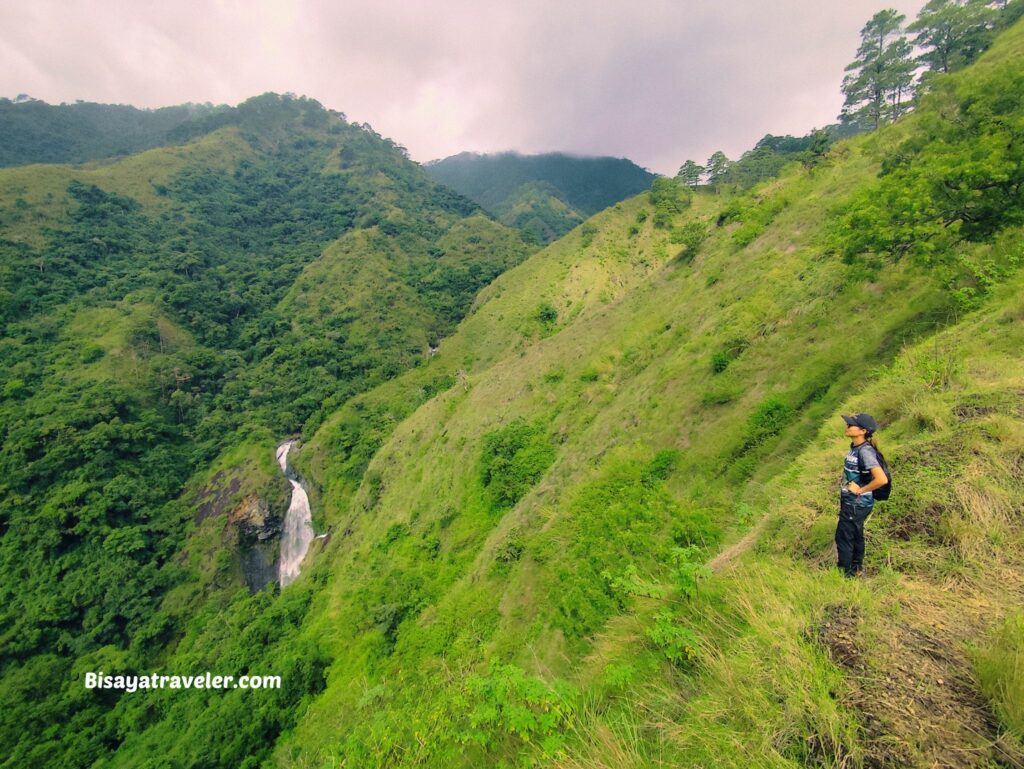
For a moment, I thought I had the strength and confidence to conquer the mountain.
Then Mt Tuwato humbled me and reminded me that mountains are unpredictable.
The non-stop ascent in Mt Tuwato
When we reached a viewpoint farther along the trail, our guide informed us that we were still far from the summit.
He estimated that we would reach the peak at around 3:30 p.m. Since it was only nine in the morning, we still had more than six hours of hiking ahead of us.
Somehow, that prediction lit a fire in our bellies.
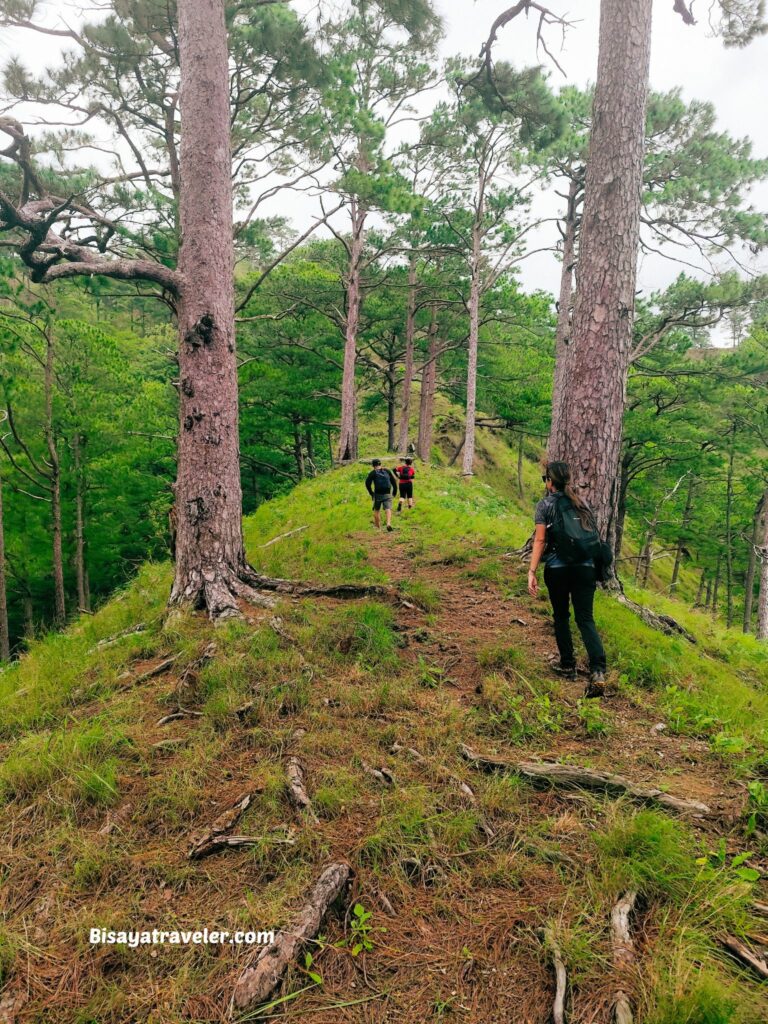
We weren’t intimidated. Instead, we felt inspired and challenged to reach the summit earlier than expected.
One of us even boldly declared that we would be there by 1:30 p.m. And here’s a little spoiler: we did arrive at the summit at 1:30 PM.
So, we kept hiking and took only a few short breaks along the way.
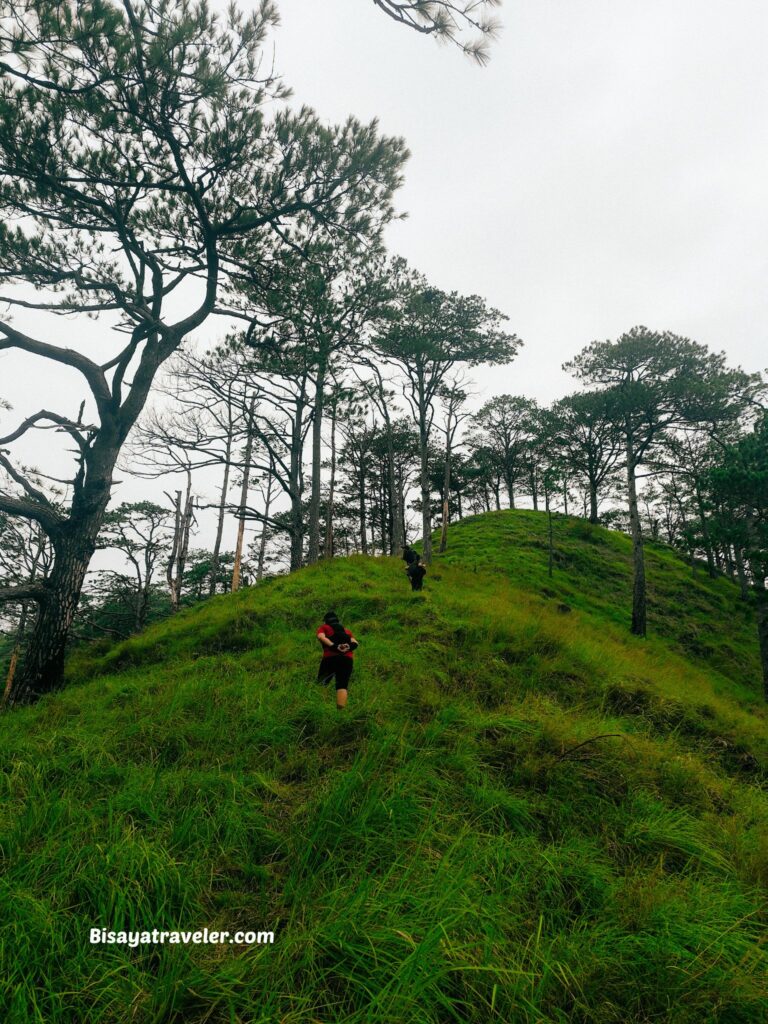
The climb became a relentless assault on our legs and lungs. The uphill trail never seemed to end. At times, I wondered if it ever would.
Then, the weather began to change.
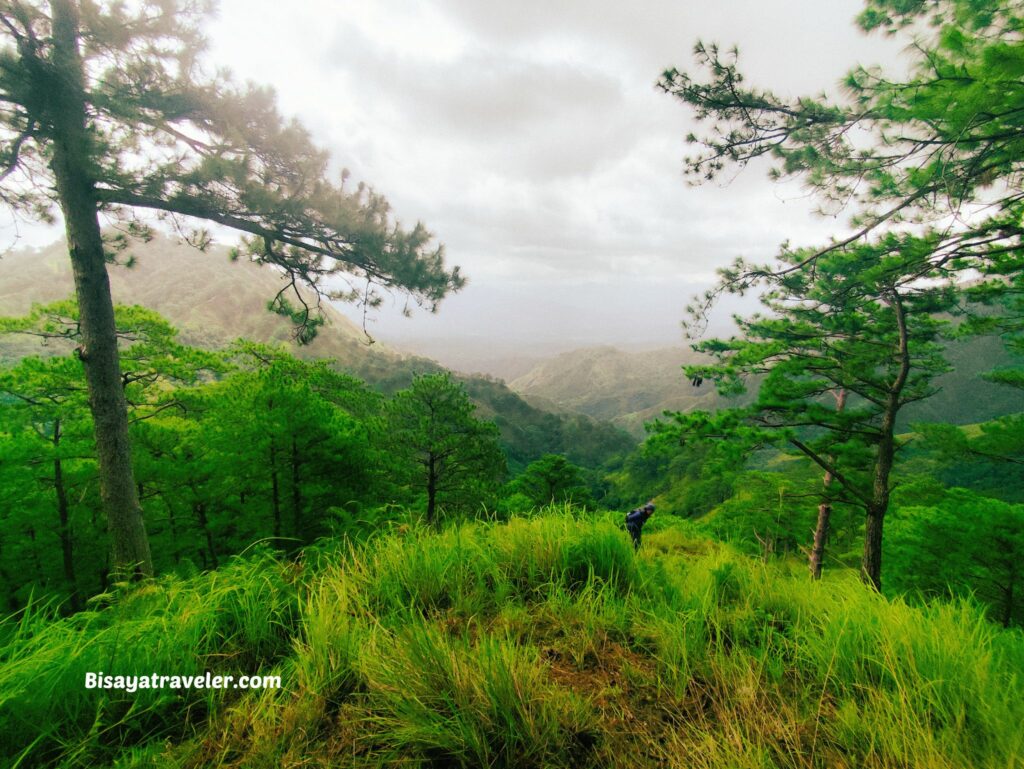
The sunny skies gradually turned gloomy, moody, and foggy. The temperature dropped, and the wind started blowing harder.
I was getting tired. My legs were tightening, and my heart was pounding like the drums in a Blink-182 song.
When I was younger, I would run up mountains like this without feeling the exhaustion in my legs.
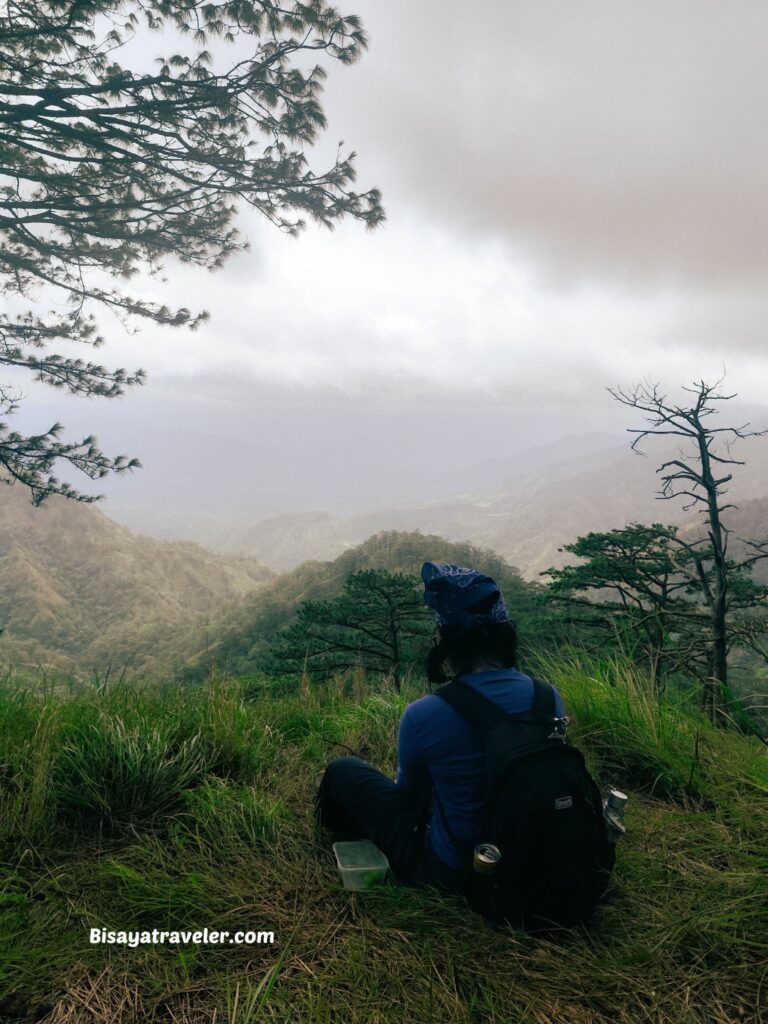
I would have raced to the summit ahead of everyone, just to prove to the rest of the group that I was strong.
But that hiker was already dead.
I was no longer as egotistical as my younger self. Getting ahead of everyone would prove nothing.
This older version of Aldrich had no interest in chasing a milestone that no one would remember a hundred years from now.
And while I no longer possessed the gift of youth, I had one weapon in my arsenal that many younger hikers often overlooked: baby steps.
In my book, Lost on Purpose, I explain in detail how baby steps can do wonders for you, both on the trail and in life.
Baby steps are short, deliberate strides taken on steep ascents.
They don’t look sexy or athletic. In fact, they look a little boring. But they work. By keeping your movements small, you conserve energy, maintain a steadier heart rate, and reduce the risk of burning out too soon.
In a way, baby steps remind me of how we should approach life.
Sometimes, the days seem to pass too quickly because we’re always living in the fast lane. We don’t slow down. We keep running from one goal to the next until burnout finally catches up with us.
Baby steps teach us that we don’t have to move fast to make progress. We just have to keep moving at a pace we can sustain.
And that was exactly what I did.
I shortened my strides, settled into a steady rhythm, and slowly felt my body recover.
When I looked back, I saw the woman who had earlier joined our lead pack. I told her to hike at her own pace and conserve her energy because our Mt Tuwato day hike was far from over.
Then, the uphill climb stopped. There were still ascents, but they seemed more manageable.
Unfortunately, the real battle was about to begin.
My thighs were burning, and I could feel the muscles in my legs beginning to tighten.
Crossing the knife-edge ridge of Mt Tuwato
The seemingly endless ascent was finally over, but another serious test waited ahead.
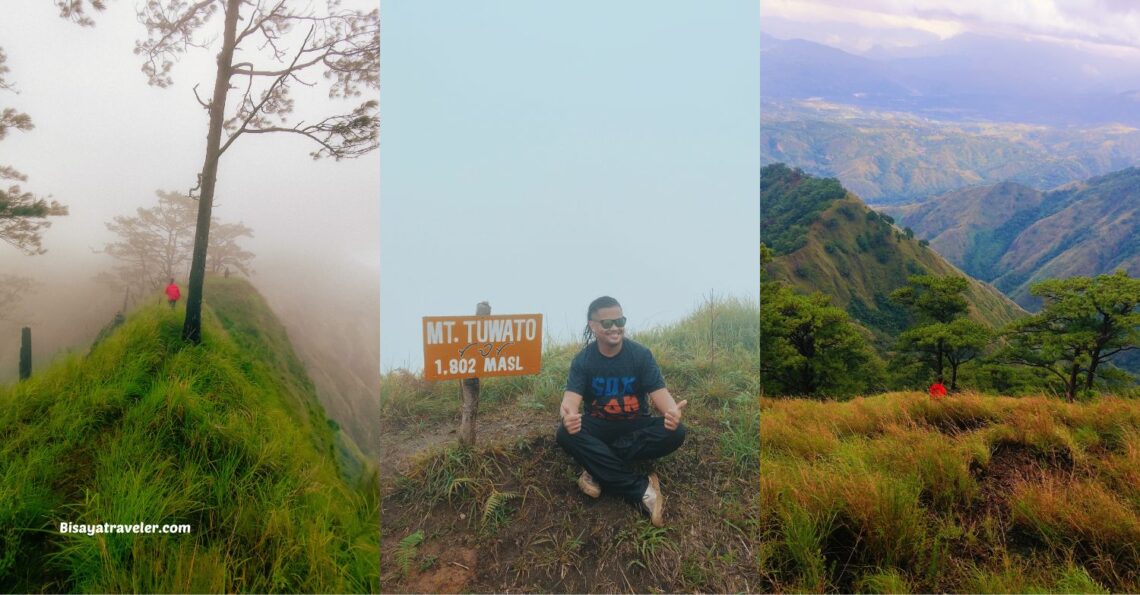
Our guide informed us that we were approaching Mt. Tuwato’s knife-edge ridge.
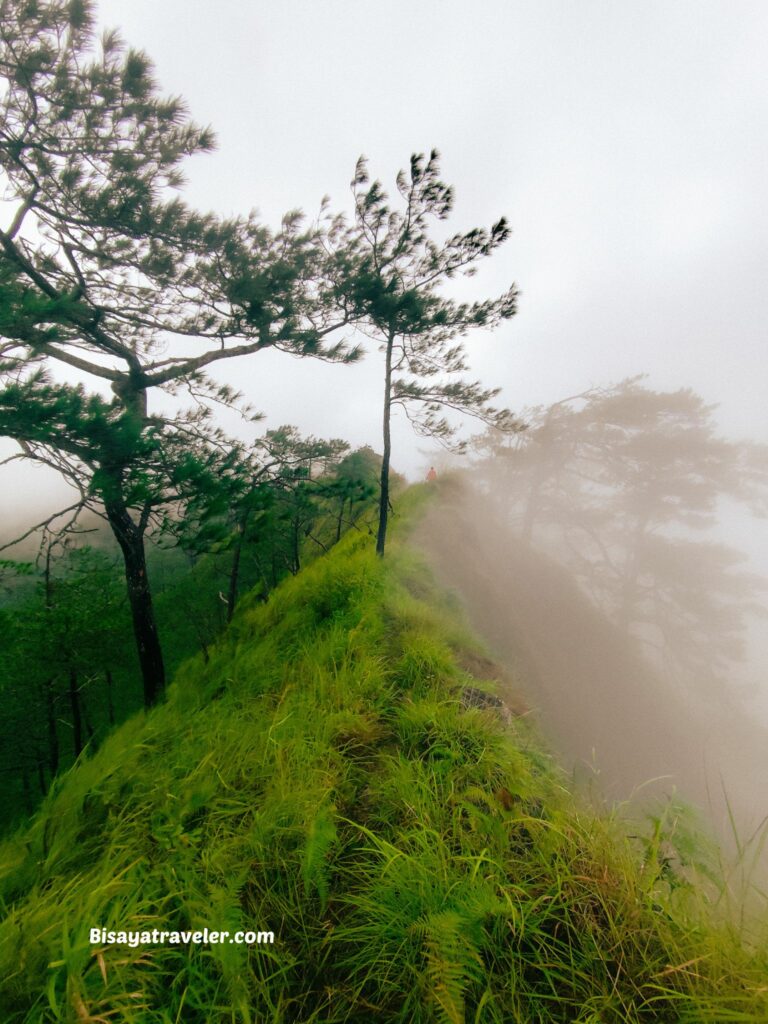
As if crossing a narrow ridge weren’t challenging enough, the wind was blowing harder than it had all day.
Remember those voices in my head I was talking about earlier? They were starting to make an appearance again.
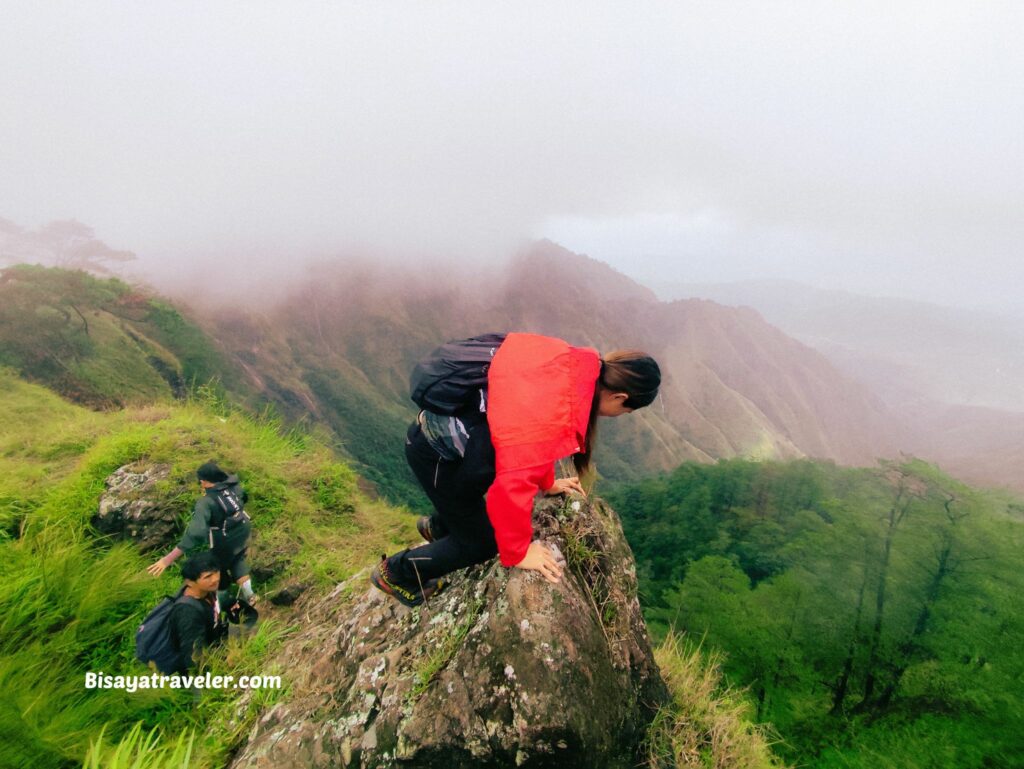
Even so, I kept moving, squeezing through narrow pathways lined with sharp blades of grass and protruding branches.
Along the way, I suddenly felt a sharp sting in my left ear.
I touched my ear and felt liquid trickling down my neck.
When I pulled my hand away, I saw blood.
As I kept walking, the sharp blades of grass continued slashing at my hands and exposed skin.
Then, our good old friends, the alimatik, started showing up.
They crawled onto my knees, back, and arms.
Fortunately, I had no trouble dealing with them. I could easily remove them from my skin, even without using alcohol.
This was the moment I realized that Mt Tuwato wasn’t an ordinary hike.
It felt like I had wandered into a real-life episode of Survivor, one that would test my endurance, skills, and ability to think under pressure.
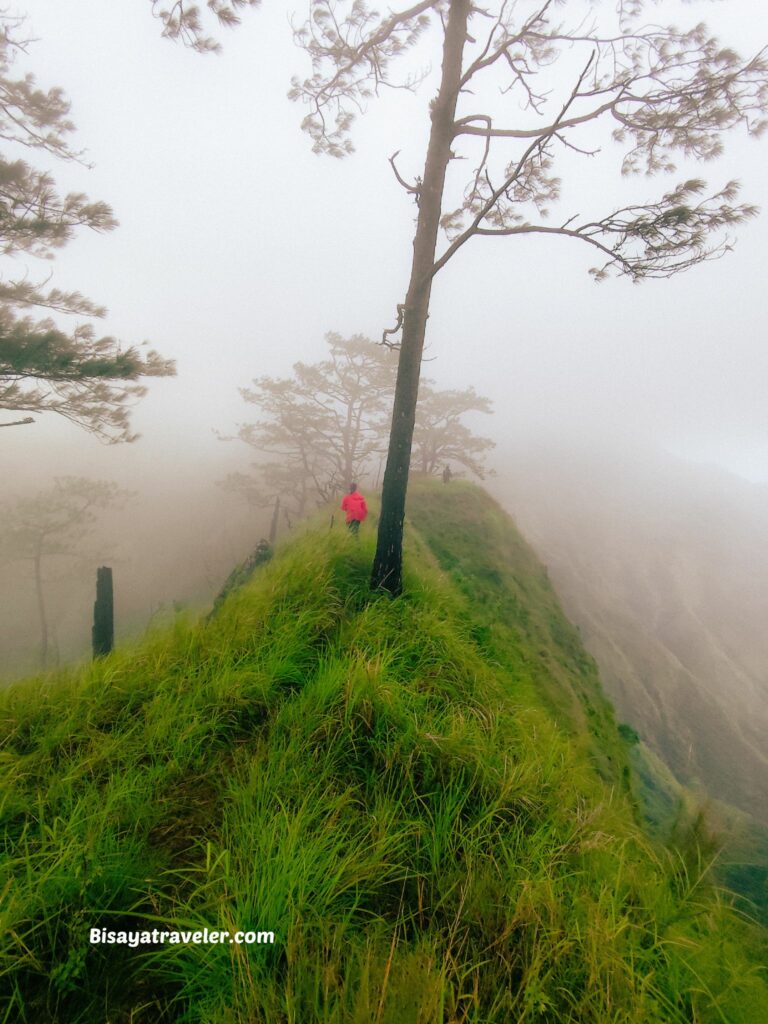
And soon, it truly felt that way as we crossed Mt. Tuwato’s knife-edge ridge.
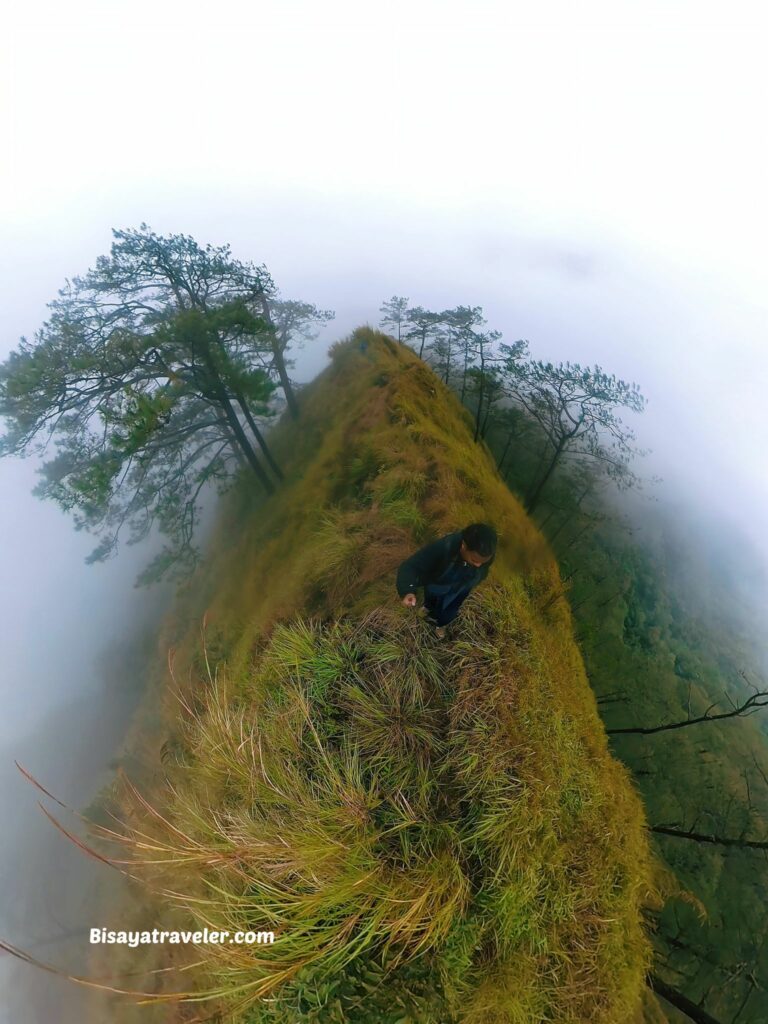
The crossing wasn’t particularly technical or tricky. As long as you stayed focused, you could navigate this section without much trouble.
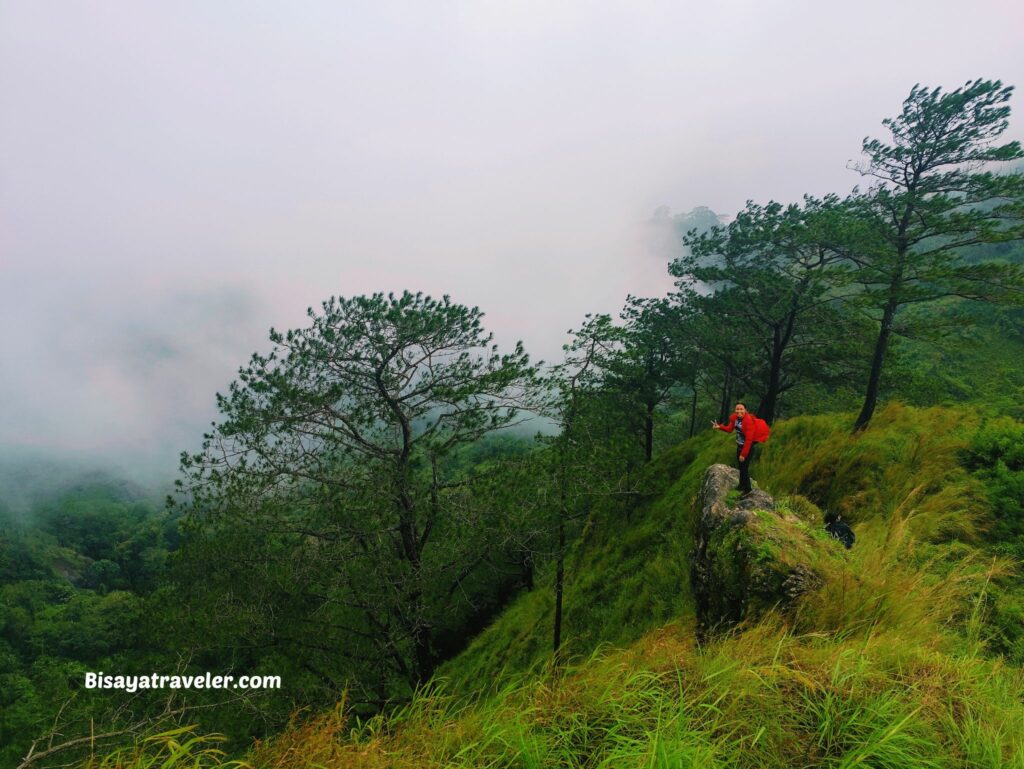
But it was long, perhaps even longer than the knife-edge ridge of Mount Guiting-Guiting. The wind was also blowing hard, as if it were furious at us for climbing Mt Tuwato that day.
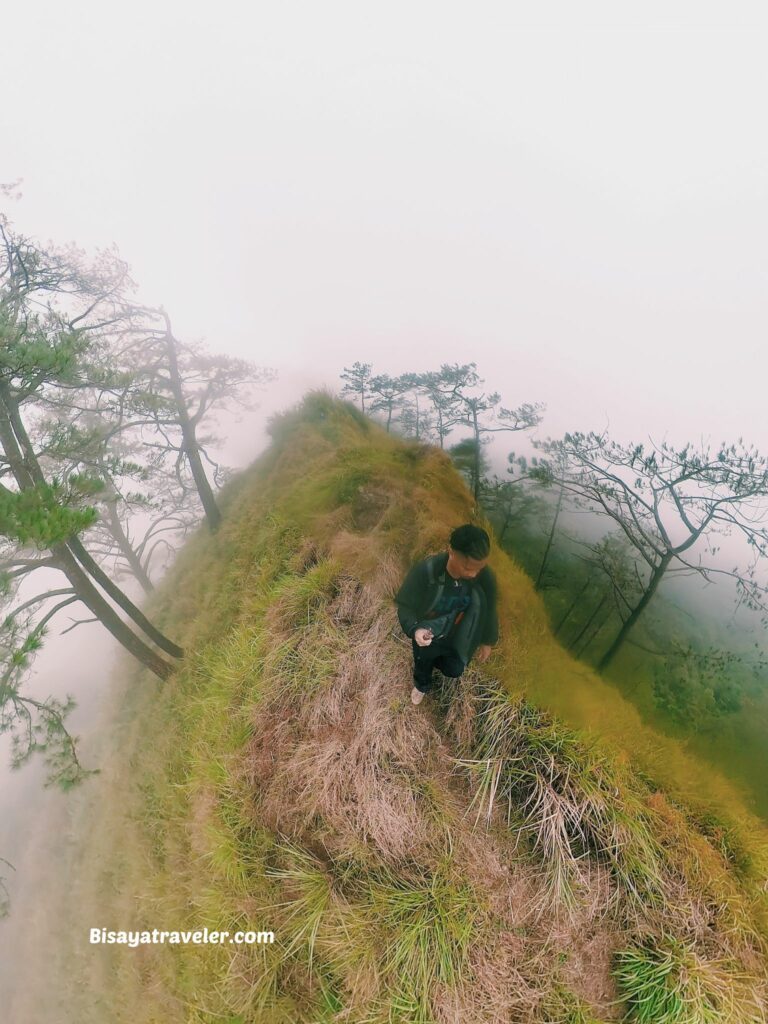
We had to move carefully and think about every step.
One false move, and you could end up becoming part of the pine forest below.
Sometimes, we had to stop walking, steady ourselves, and concentrate on maintaining our balance. Whenever we encountered trees or large rocks, we briefly took shelter behind them from the wind.
Despite everything Mt. Tuwato threw at us, we never gave up. We kept moving, focusing on one careful step at a time as we battled the mountain’s punishing terrain.
Moments later, our guide told us that we were getting close to the summit.
Now, that was the kind of news my exhausted body needed to hear.
The hike to the top of Mt Tuwato
The wind showed no signs of slowing down. Soon, the rain joined the fray.
As we made our final push toward the summit, we had to contend with both. The wind battered our bodies while the rain made the trail colder, wetter, and more slippery.
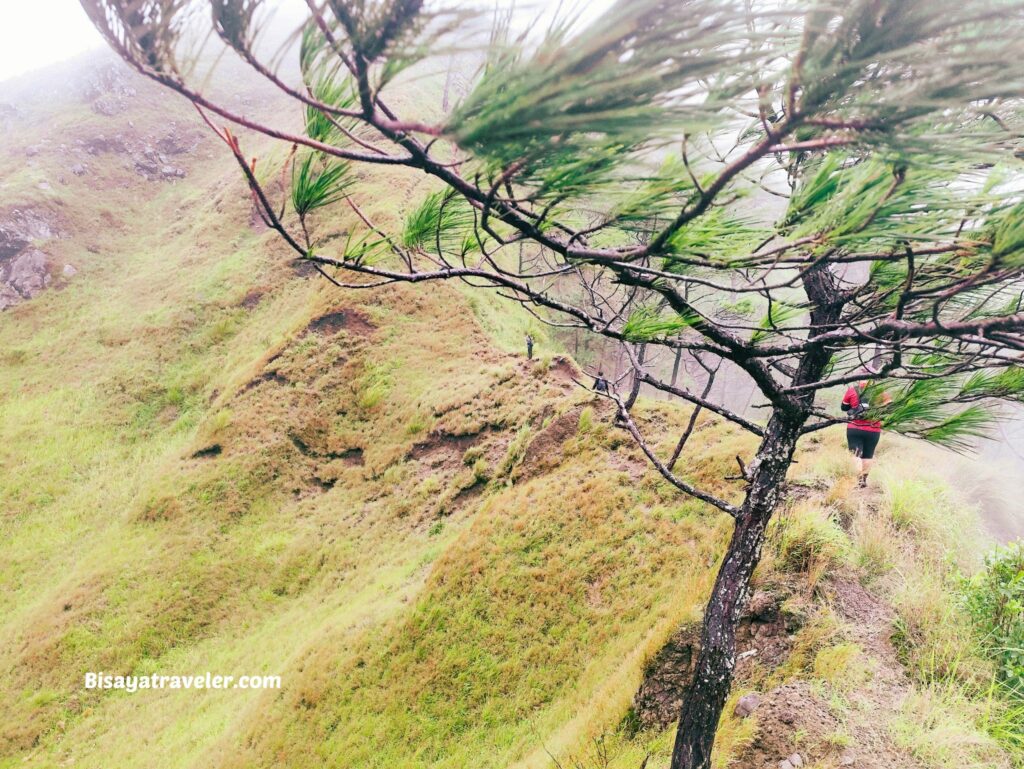
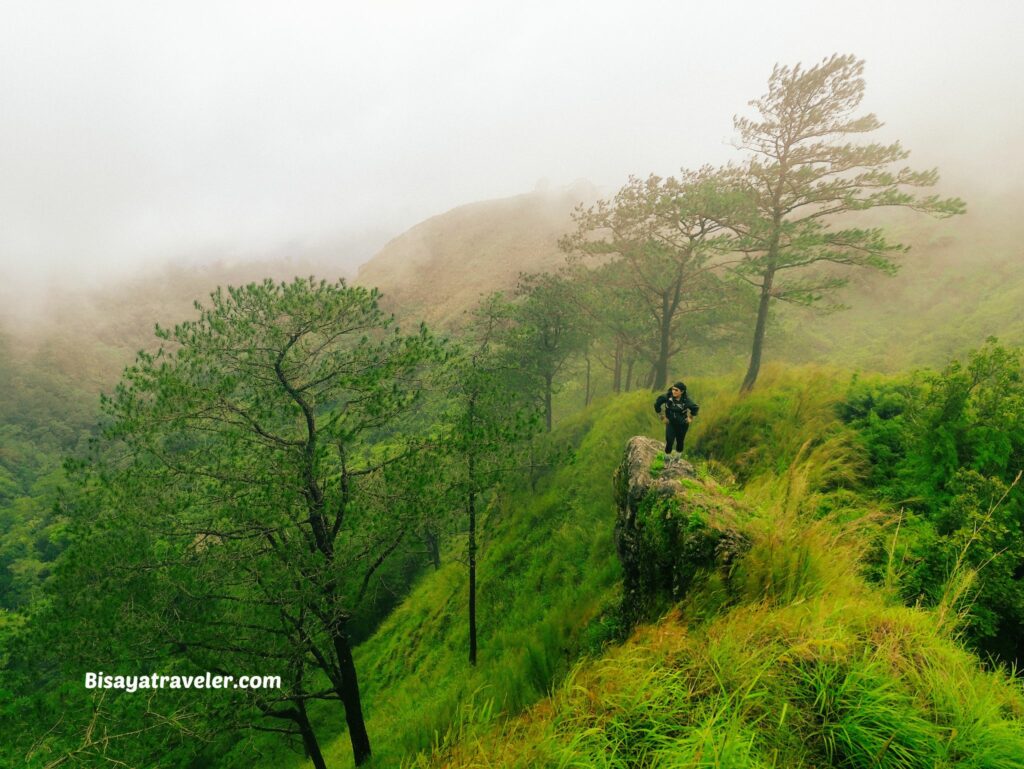
The surrounding landscape was mostly hidden beneath a white blanket of fog. Occasionally, however, the fog would lift and reveal a glimpse of the mountain’s beauty.
Whenever the view cleared, I quickly took a photo before the fog swallowed everything again seconds later.
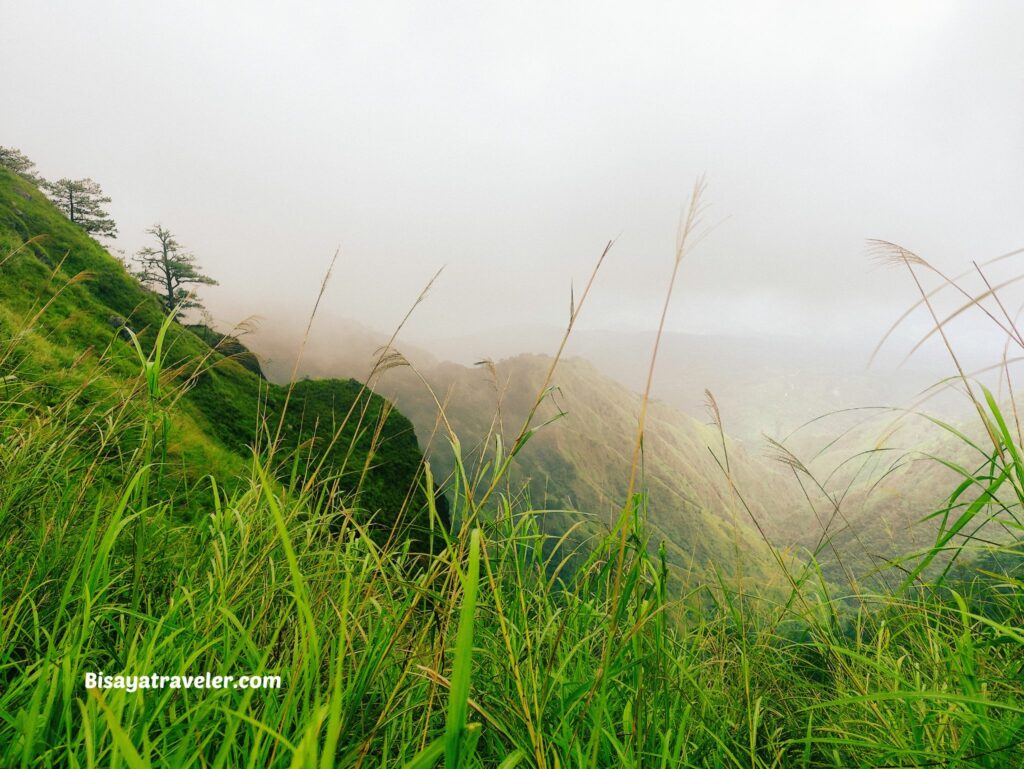
Some of the scenery reminded me of postcards from Iceland.
Unfortunately, I couldn’t capture every view. I had to keep my eyes on my footing, and by the time I reached for my camera, the fog had already swallowed the landscape again.
The hike continued, and the conditions went from bad to worse.
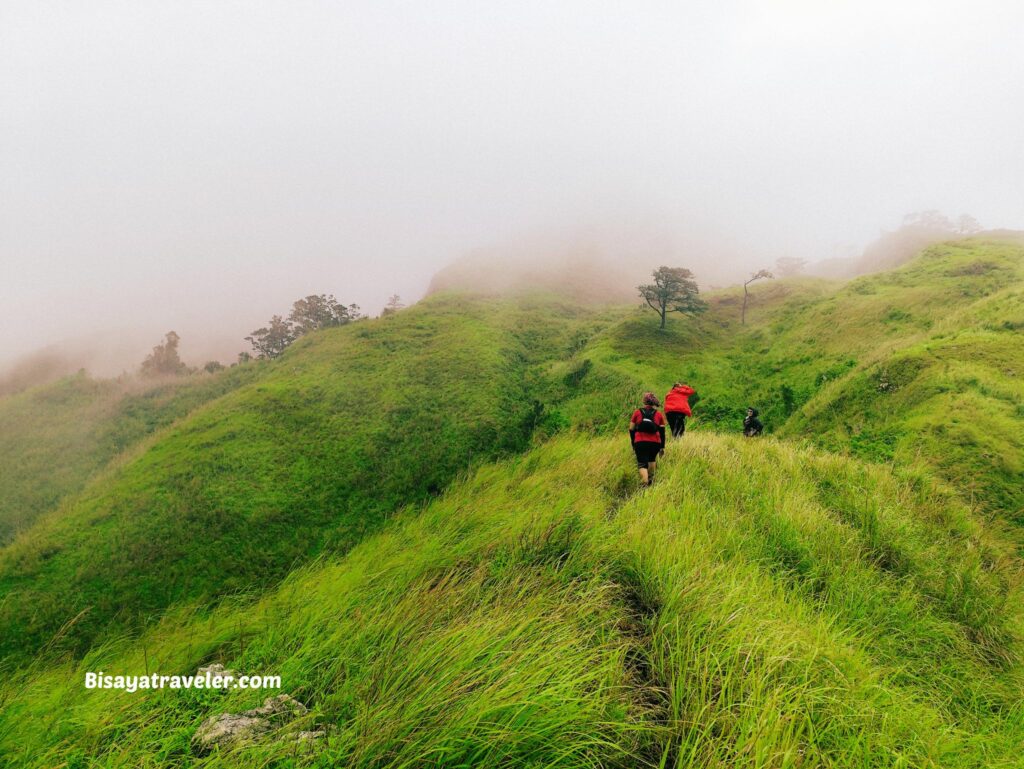
If we weren’t careful, the wind could easily throw us off balance.
Despite the nonstop challenges, we never lost hope. We kept putting one foot in front of the other until we were just moments away from the summit.
Our guide then asked if we wanted to make the final climb to the top.
Of course, we answered, “Fuck yes.”
The summit of Mt Tuwato
I was no stranger to summits with nothing but white, bond-paper views.
During my first major climb in Ormoc, the skies cleared for only about 30 seconds.
When I climbed Mt. Talinis in Negros, I also got just a few seconds of clearing.
But I didn’t climb mountains for the views.
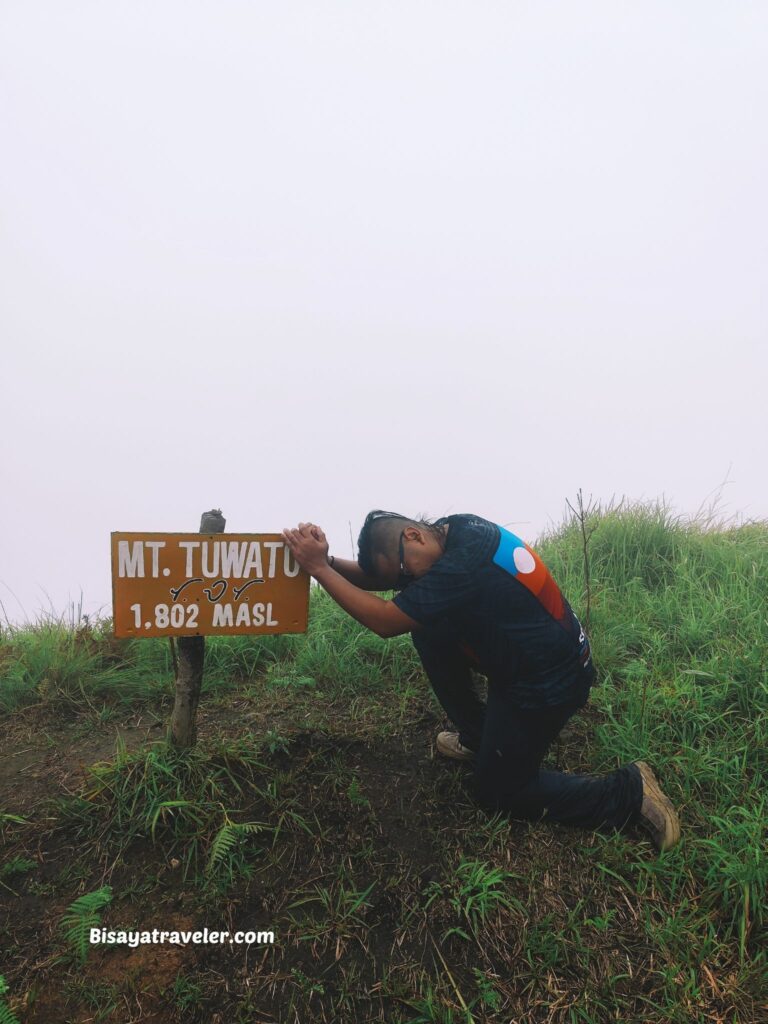
If my only goal were to take pictures of beautiful scenery, I would have chosen an easier mountain.
I climbed mountains to get messy, to get punished, and to be reminded that life isn’t always sunny.
When I finally reached the summit of Mt. Tuwato, I felt a kind of joy that I couldn’t put into words.
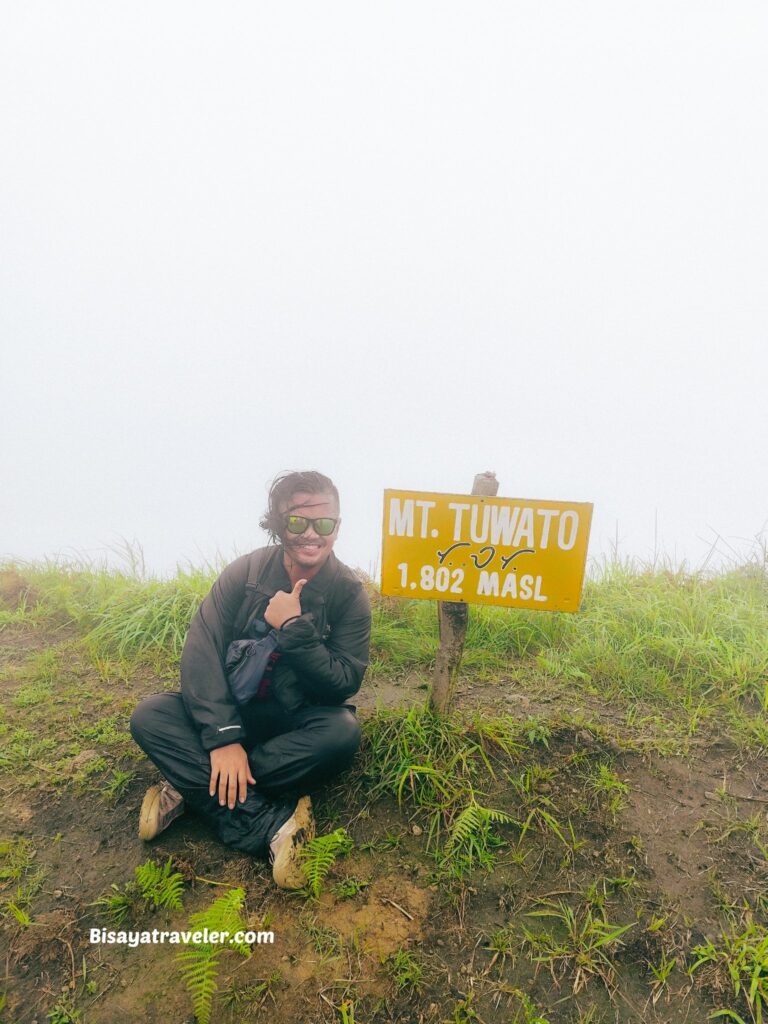
It felt like reaching a milestone in life after surviving one storm after another.
I’ve always said that hiking is the best metaphor for life.
Reach a summit after a hike like this, and you’ll understand why I keep saying it.
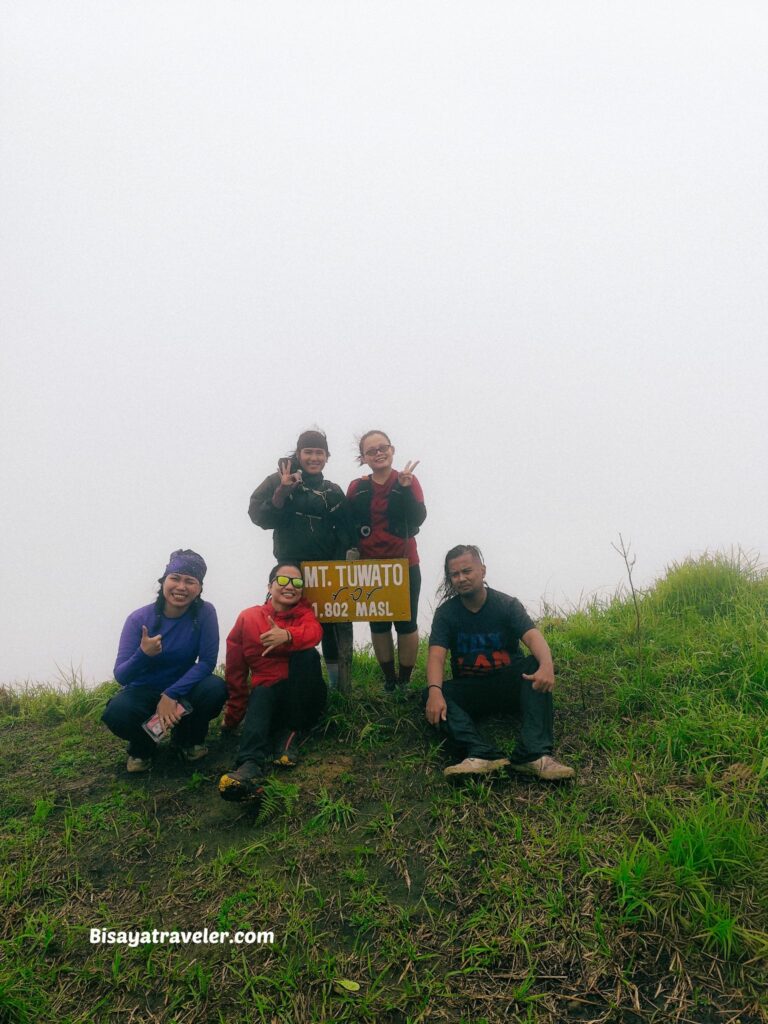
Every mountain I’ve summited has reminded me of how I survived the darkest moments of my life.
Each one has been a painful yet beautiful reminder that we are stronger than we think. Sometimes, the only way through a difficult season is to keep moving and take one baby step at a time.
Perhaps that’s why I can’t stop hiking.
My body craves it. My soul needs it. My mind depends on it to find inspiration for my art.
And I need it to keep me humble and remind me that no storm lasts forever.
The downhill hike in Mt Tuwato
Contrary to popular belief, hiking downhill isn’t necessarily easier than climbing uphill.
Sure, it sounds easier because you’re no longer huffing and puffing your way to the top.
But for older hikers like me, the descent can take a serious toll on the knees, especially when yours already have years of wear and tear.
During the first part of the descent, I took my time.
I didn’t rush because the trail was slippery and covered with loose soil and rocks.
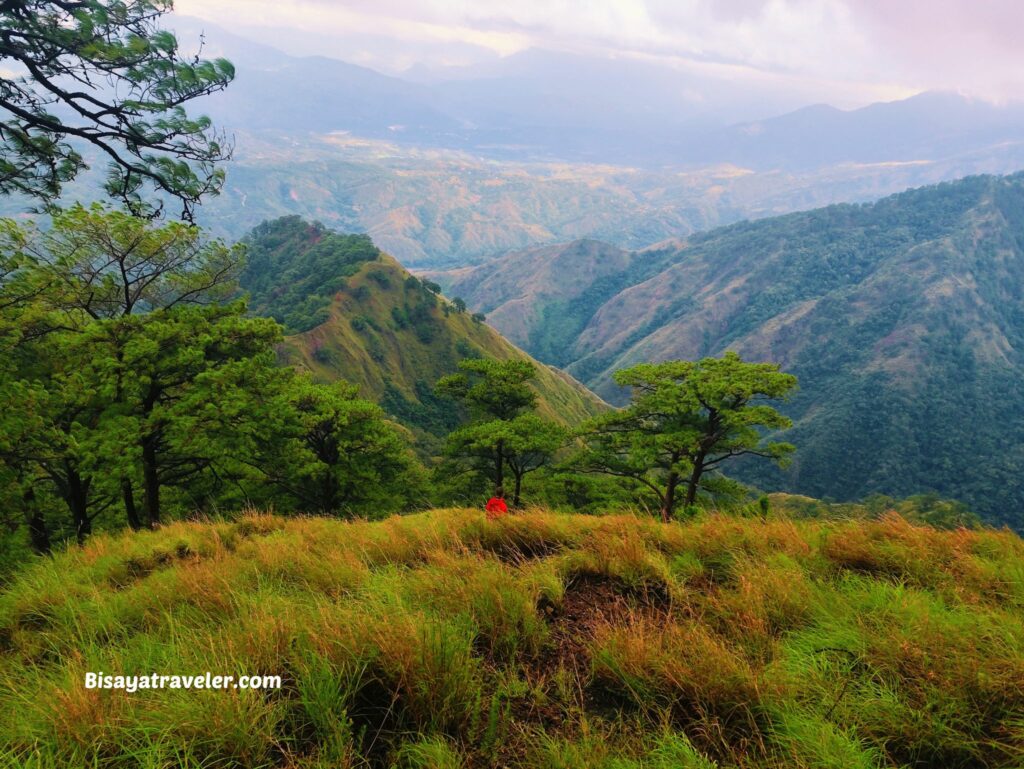
Some sections were ridiculously steep, too.
By the way, remember the woman who had joined our lead pack earlier?
At some point during the descent, she became separated from us while following behind me. Since she didn’t have much experience reading the terrain and trail markers, she lost her way.
We heard her shouting and asking for directions.
Thankfully, our guide found her, and she was safe and sound.
As we prepared to resume the hike, I made a decision that would help ensure we all made it home safely.
I would stay at the back of our smaller group and make sure she didn’t get lost again.
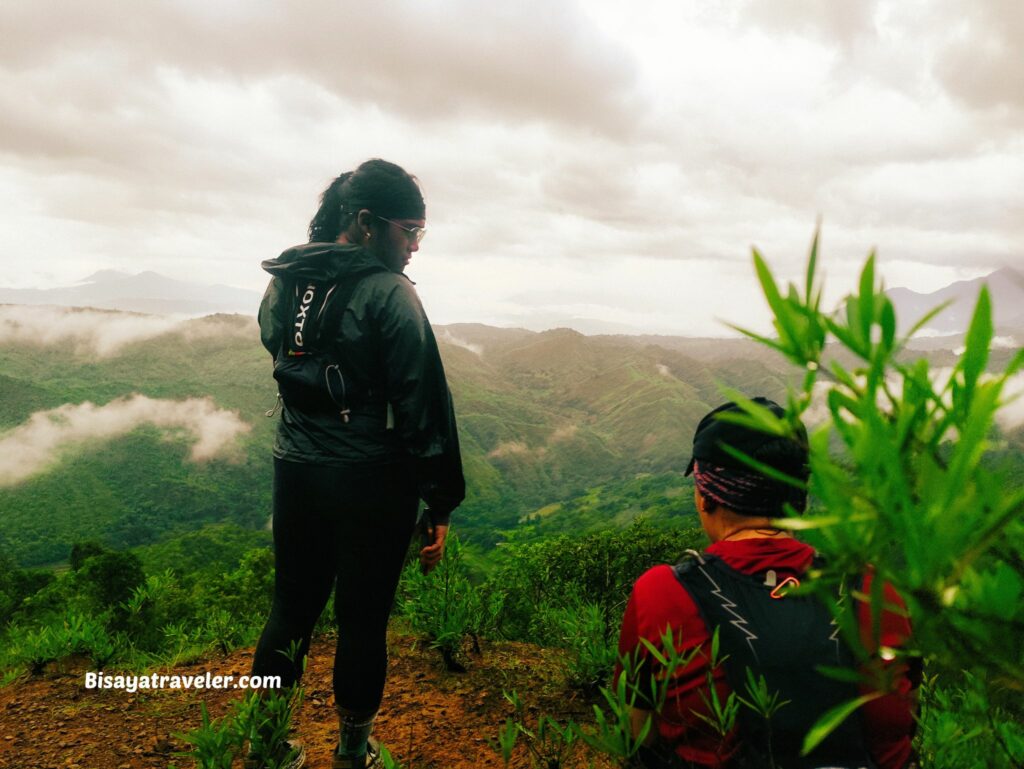
On the surface, it didn’t seem like a smart decision.
After all, I would have to hike at someone else’s pace and give up my chance of finishing early.
But finishing early no longer mattered to me.
I don’t post my Strava stats on Facebook to show everyone how quickly I finished a mountain. I don’t brag about record times or how fast I reached the summit.
Because the truth is, there’s a great equalizer both on the trail and in life.
In life, we call it death. In hiking, we call it the van ride home.
On organized hikes, people generally fall into three groups.
The lead pack consists of the faster hikers, including those who practically run along the trail.
The middle group includes hikers who are neither too fast nor too slow.
Then there’s the sweeper group. They aren’t exactly weak or slow. Some simply prefer to follow their own pace, appreciate the scenery, and conserve enough energy to finish safely.
The lead pack reaches the summit first, followed by the middle and sweeper groups. But arriving first doesn’t mean going home first.
At the end of the hike, everyone waits.
The van won’t leave until the whole team is complete.
In a strange way, that reminds me of life.
Some people graduate early and land their dream job at 22. Others discover their true calling and begin again at 44.
Neither one is ahead and neither one is behind. They’re just moving through life at different paces.
That day, slowing down didn’t make my hike less successful. Instead, it gave the journey a deeper purpose.
I would rather finish late knowing I helped someone get home safely than arrive early with a record no one would remember.
Mt Tuwato reminded me that real strength isn’t measured by how far ahead you can go.
Sometimes, it’s measured by your willingness to look back, slow down, and walk beside someone who needs you.
The survival game
When we returned to the river, I thought we were finally done with the death-defying challenges.
I was wrong.
We still had raging rivers to cross, and the water levels continued to rise because of the persistent rain.
Whenever the current became too strong or the water too deep, our guide searched for another way across and created a new pathway for us.
At one point, we had to cross a ramshackle steel footbridge that had clearly seen better days.
It was frightening, dangerous, and strangely exciting.
It also gave birth to our unofficial motto for the hike:
“I love Mt Tuwato.”
And while all of this seemed terrifying and the kind of thing my insurance agent would frown upon, I felt more alive than I had in a long time.
For the past couple of days, I had been tired in the most boring way possible. I lacked sleep, worked for hours, waited at the airport, and sat through a long drive.
On Mt Tuwato, I was still tired, but it felt different.
I had scratches on my skin, alimatik crawling on my body, and aching muscles. Yet my senses were awake. I noticed the sound of the river, the force of the wind, and every movement of the people around me.
I wasn’t thinking about work or how many hours of sleep I had lost. I was only thinking about how to cross the river and knife-edge ridge without becoming tomorrow’s headline.
Perhaps that’s one reason I keep hiking.
Daily routines can make weeks disappear without you noticing. Mountains do the opposite. They make every hour feel long, difficult, and real.
Mt Tuwato didn’t make my life easier. It gave me bruises, scratches, and another reason to question my decisions.
After hours of scrambling, crawling, and walking, we returned to the jump-off point with the rain still pouring.
We were soaked, scratched, exhausted, and probably smelled like a combination of river water, mud, and poor decisions.
Our group finished at around eight in the evening, 13 hours after we started.
The sweeper group didn’t arrive until six the following morning.
But everyone made it back safely. That mattered more than any record time people would forget after a few days.
Once the team was complete, we climbed into the same van and began the long ride home.
Someone said it again.
“I love Mt Tuwato.”
This time, I think we actually meant it.
How difficult is the hike to Mount Tuwato?
Although Mt Tuwato is widely rated 9/9, I would personally give its physical difficulty a 7/9.
Maybe I’m old-fashioned, but I still reserve 9/9 for longer, multiday expeditions that test your body for several consecutive days.
But difficulty and danger are not the same.
In persistent rain, Mt Tuwato’s rising rivers, slippery descents, and exposed knife-edge ridge leave little room for error. In terms of risk under those conditions, it was an entirely different story.
One careless step could still earn you a personal introduction to Saint Peter.
Where is Mount Tuwato located?
Mt Tuwato is located in Barangay San Luis in Cervantes, Ilocos Sur. Its usual jump-off and exit point is in Sitio Liqueo. Although the mountain lies within Ilocos Sur, it forms part of the Cordillera mountain range and is geographically closer to Mountain Province than Vigan.
How to get to Mt Tuwato?
Most hikers get to Mt Tuwato by joining an organized climb from Metro Manila. These packages typically include transportation to Barangay San Luis in Cervantes, Ilocos Sur, along with registration and coordination with local guides.I joined Travel Buddies PH21 for this trip and would recommend them to experienced hikers planning the same adventure.

Aldrich Infantado
Aldrich Infantado is a travel junkie and a writing aficionado who loves to share amazing travel tips to his fellow travelers.


You May Also Like
Mount Matutum And The Pathway To Happiness
Bacolod: How A Canceled Flight Became The Best Twist Of All